
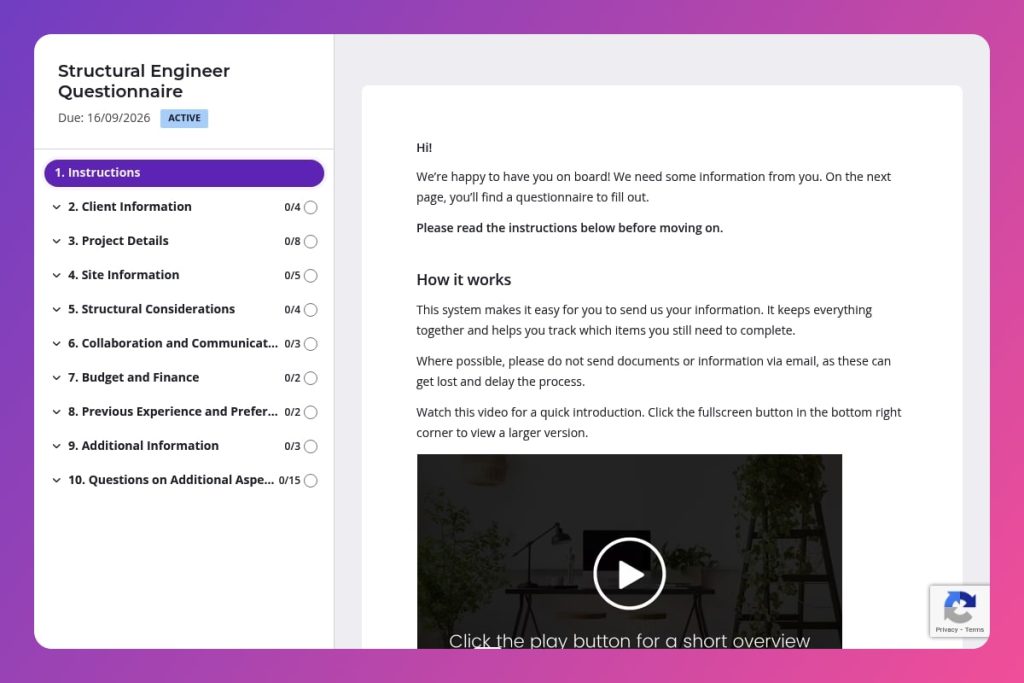


A client intake form that collects comprehensive project details, site conditions, structural requirements, budget parameters, and stakeholder information before structural engineering work begins.

General contractors, construction project managers, architects, and developers who need to gather complete technical and logistical information from clients before engaging structural engineers.

Send this immediately when a potential client inquires about a project, before initial consultations, so you have all necessary details to provide accurate proposals and avoid delays caused by missing documentation.
You're chasing down project details across email threads, phone calls, and sticky notes. The architect needs soil reports you don't have. The client forgot to mention seismic requirements. Your structural engineer is waiting on half a dozen answers before they can even start. This chaos costs time, money, and credibility.
A structural engineer questionnaire fixes this. One form captures everything upfront: project scope, site conditions, load requirements, budget constraints, and stakeholder contacts. No more back-and-forth. No missed details. This post walks you through what to include in your questionnaire, how to use it effectively, and gives you a free template to start with. Let's break it down.
Client Information
Capture the responsible contacts and roles so approvals, decisions, and updates flow to the right people.
Project Details
Define baseline scope, schedule, budget, and design context to size effort and set deliverables.
Design constraints, existing documents, and schedule and budget commitments set scope, risk, and sequencing; lock these early.
Site Information
Establish site constraints and due diligence status that will govern foundation and lateral system decisions.
Geotechnical, environmental, and zoning inputs drive foundation strategy, lateral design, and approvals; identify gaps for early investigation.
Structural Considerations
Document preferred materials, systems, and load criteria to align analyses and specifications with client intent.
Material and system choices and load criteria determine analysis methods, detailing, procurement, and permitting; confirm governing codes and performance targets upfront.
Collaboration and Communication
Set expectations for stakeholders, communication cadence, and tool stack to streamline coordination.
Budget and Finance
Confirm fee expectations and funding limits to tailor scope and phasing.
Funding constraints affect phasing, value engineering, and deliverable timing; align expectations before kickoff.
Previous Experience and Preferences
Surface working preferences and reference projects to align process and design direction.
Additional Information
Leave room for edge cases, questions, and requests that impact scope or deliverables.
Send it before the first meeting: Get the structural engineer questionnaire to potential clients as soon as they reach out. You'll have their project scope, site conditions, and budget details in hand before you even sit down to talk. This transforms initial meetings from fact-finding sessions into strategic conversations about solutions.
Ask for existing documentation upfront: The form requests soil reports, blueprints, and geotechnical studies. Clients often forget these exist until you ask three times. Make it clear in your form instructions that attaching these documents now saves weeks of delays later. Even partial or outdated reports give your engineer a head start.
Flag the environmental and regulatory questions: Most clients underestimate local zoning restrictions and environmental concerns. When you send the form, specifically call out these sections. A quick note like "Check with your city planning department if you're unsure" prevents costly surprises mid-project.
Review submissions within 24 hours and circle back: Don't let completed forms sit in your inbox. Read through answers immediately and follow up on anything vague or incomplete. If a client writes "residential project, normal size," you need specifics. A quick call to clarify square footage, number of stories, and material preferences keeps momentum going.
Use their answers to scope your proposal accurately: The budget, timeline, and complexity details they provide tell you exactly what they can afford and when they need it. Reference their specific answers in your proposal - it shows you paid attention and helps justify your pricing based on their actual requirements, not guesswork.
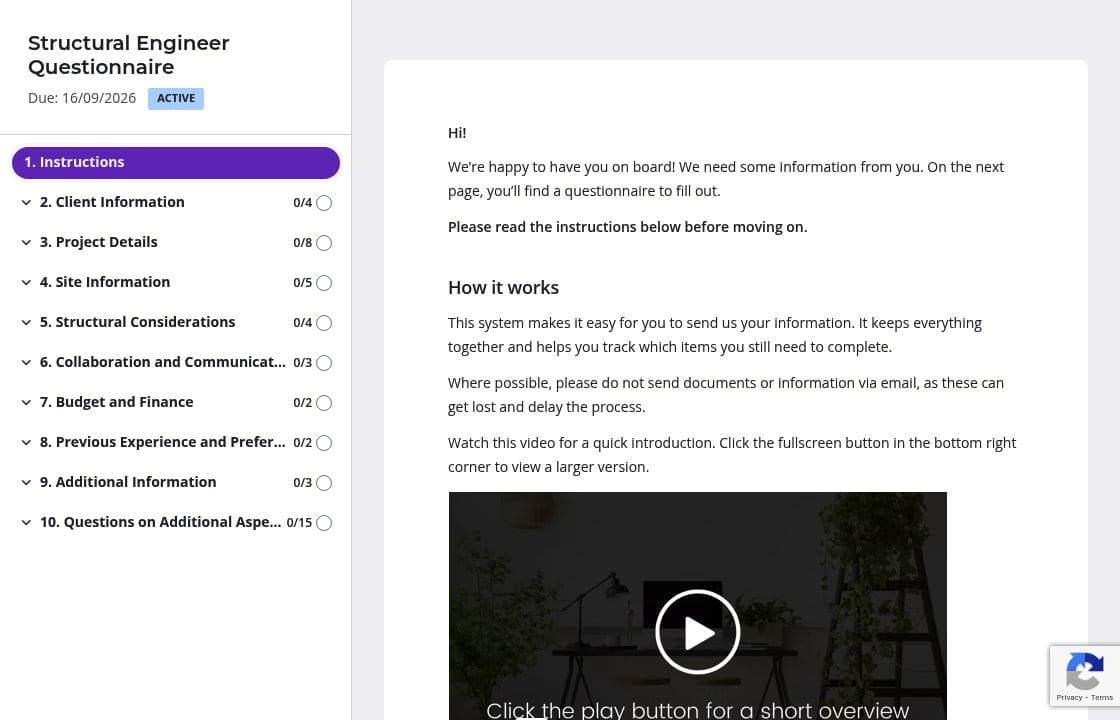
Structural projects involve a lot of information. Use pages to separate Client Information, Project Details, Site Information, and Structural Considerations into distinct sections. Your clients can tackle one area at a time instead of facing a wall of questions. They can save progress and return later - especially helpful when they need to dig up soil reports or check with their architect about load requirements.
The site conditions and geotechnical questions often confuse people who aren't construction experts. Drop in brief instructions above those fields explaining what you actually need. "Describe any slopes, drainage issues, or access challenges" is clearer than just asking about topography. You can add example images of soil reports or site plans so clients know exactly what to upload. Getting it right the first time beats three rounds of clarification emails.
Clients always mean to send those blueprints and geotechnical reports. They just forget. Content Snare sends gentle automatic reminders so you don't have to chase anyone down. You can customize the timing and messaging - maybe a reminder after three days for the initial questions, then weekly nudges for outstanding documents. You stay top of mind without being the person who nags.
Not every project needs seismic design considerations or existing structure assessments. Set up conditional logic so those questions only appear when relevant - if someone selects "commercial" and "California location," you can trigger seismic questions automatically. If they indicate a greenfield site, skip the existing structures section entirely. Clients see a streamlined form tailored to their actual project, not a generic catch-all.
Content Snare centralizes everything in one secure place with automatic reminders, clear progress tracking, and file organization that actually works. Thousands of businesses trust it to collect information professionally - it's ISO 27001 certified and has hundreds of 5-star reviews across G2, Capterra, and Trustpilot.
Clients get a seamless experience. They see your branding, not a generic form. Instructions sit right where they need them. They can save progress and upload large files like blueprints and geotechnical reports without email attachment limits. The whole process feels like an extension of your business.
**More importantly, you get to stay efficient without the busywork: **automatic reminders handle follow-ups, while real-time progress tracking shows exactly what's outstanding. Content Snare integrates with the tools you already use, so information flows into your project management system or CRM without manual data entry.
The structural engineer questionnaire is just one application. Construction companies use Content Snare to collect subcontractor credentials and insurance certificates, gather homeowner specifications for custom builds, request as-built documentation from architects, onboard new project managers with compliance paperwork, and coordinate RFI responses across multiple trades. Any time you need information from clients, consultants, or contractors, Content Snare eliminates the chaos.


