
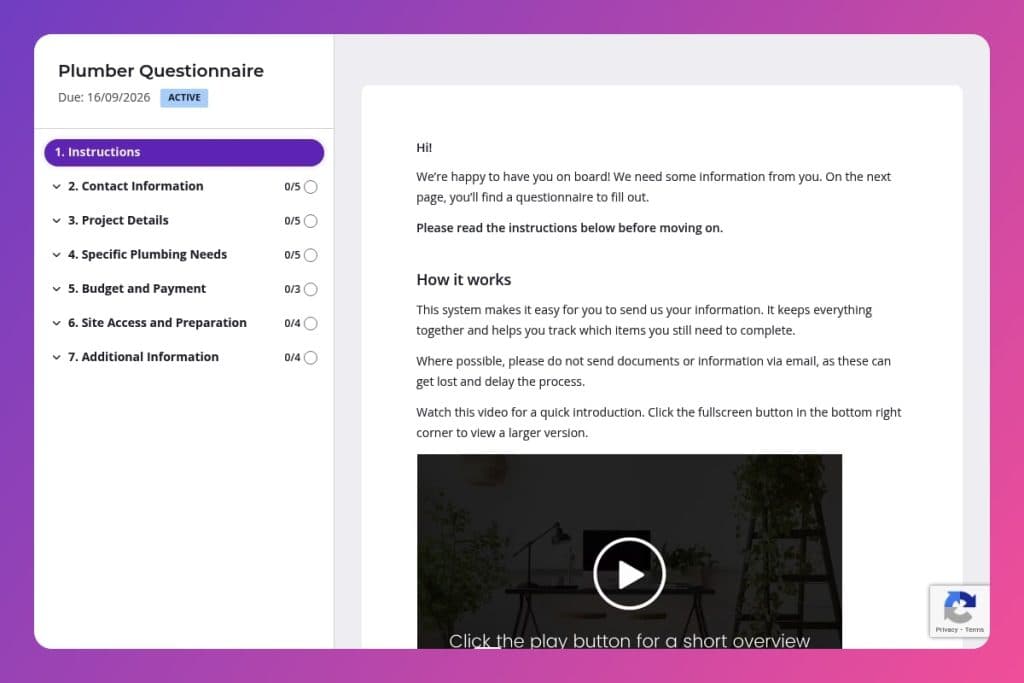


A pre-job questionnaire that captures project scope, site conditions, specific plumbing installations, budget parameters, and access restrictions before scheduling on-site work.

General contractors, construction project managers, and plumbing subcontractors who need complete project details from clients to provide accurate quotes and avoid costly site visit delays.

Send this form 48 hours before site assessments or immediately after initial client contact to gather essential information that prevents miscommunication, reduces rework, and ensures you arrive prepared with appropriate materials and time estimates.
Miscommunication on plumbing scope costs construction projects an average of 15% in delays and rework. A plumber shows up expecting a simple fixture swap - only to find outdated pipes, restricted site access, and no one available to answer questions. The job stalls before it starts.
A plumber questionnaire solves this problem. It captures essential details upfront: project type, specific installations needed, site restrictions, timeline expectations, and budget parameters. You'll get what you need to know before scheduling work, reducing surprises and keeping projects on track. This post covers what a plumber questionnaire should include, practical tips for getting clients to complete it, and a free template you can customize. Let's break it down.
Contact Information
Capture primary contact and job-site details for scheduling and follow-ups.
Project Details
Define scope, setting, and timing to qualify the request and plan resources.
Specific Plumbing Needs
Translate requirements into a clear task list, product selections, and code considerations.
Budget and Payment
Set pricing parameters and payment logistics upfront.
Site Access and Preparation
Plan site logistics, working hours, and on-site coordination.
Additional Information
Collect supporting documents and context that reduce ambiguity and rework.
Send the form before the site visit: Get clients to complete the plumber questionnaire at least 48 hours before you schedule an on-site assessment. This gives you time to review their answers about existing plumbing issues, site access restrictions, and specific installation needs. You'll show up prepared with the right tools, materials list, and realistic time estimates - not wasting anyone's time with follow-up trips.
Use the budget section as a conversation starter, not a barrier: Many clients hesitate to share numbers upfront. Frame the budget questions as a way to present options that fit their constraints, whether they're interested in standard fixtures or water-efficient upgrades. When you review their submission, reference their stated budget in your quote and explain what's possible at different price points. It builds trust and shows you're listening.
Follow up on vague answers in "Additional Information": Clients often skip questions about existing plans, previous contractors, or accessibility features - either because they don't think it matters or don't have the information handy. Circle back on these before finalizing your quote. A simple call asking "You mentioned previous plumbing issues - do you have any documentation from that repair?" can uncover critical details that affect your scope and pricing.
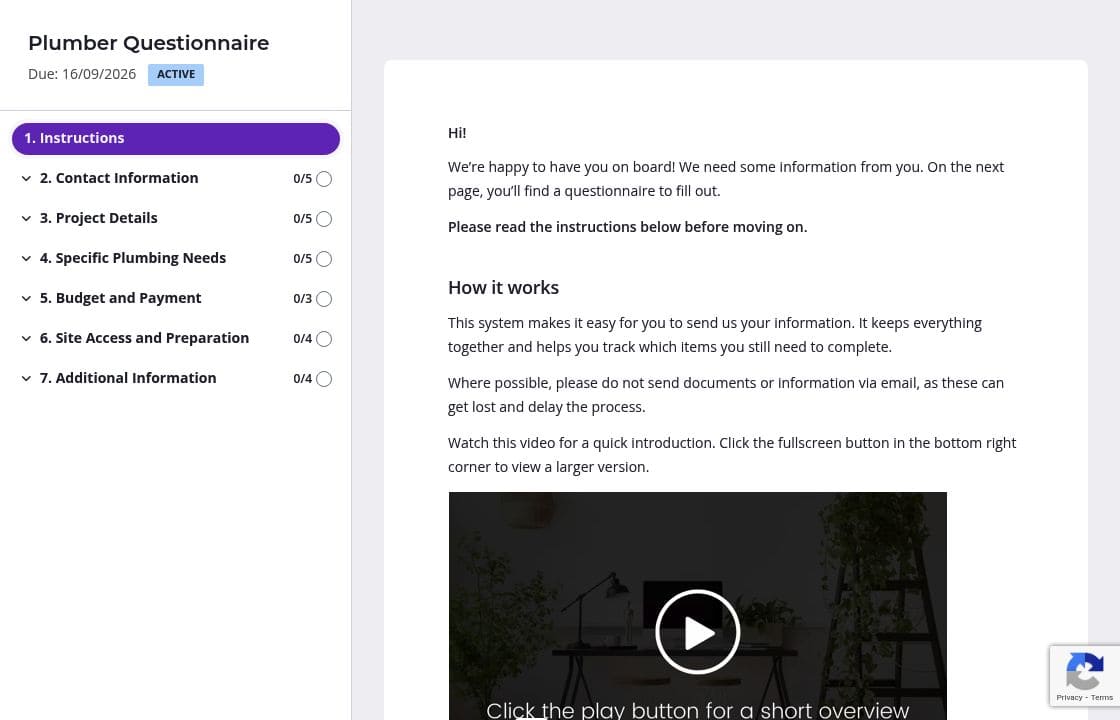
The "Specific Plumbing Needs" and "Site Access" sections can confuse clients who aren't sure what details matter. Add instruction text above these question groups explaining what you need and why. For example: "Describe the exact location of fixtures - 'master bathroom, second floor' helps us bring the right materials." Clear instructions mean fewer vague answers and less time spent clarifying later.
You likely know your client's name, email, and project address before sending the form. Pre-fill these fields so clients can skip straight to the questions that matter - project timeline, budget, specific installations. It speeds up completion and shows you've done your homework. Delete any contact questions that are truly redundant for repeat clients.
Not every plumbing project needs questions about existing plans, accessibility features, or previous contractors. Set up conditional logic so follow-up questions appear only when they're relevant. If a client selects "new installation," hide questions about prior plumbing issues. If they choose "commercial project," show questions about business hours and site access protocols. Clients see a shorter, more focused form that respects their time.
Construction timelines move fast, but clients forget to complete forms. Automatic reminders handle follow-up for you - no awkward emails asking "Did you get a chance to fill this out?" Schedule reminders at 3 days and 7 days after sending. You stay on schedule without playing the bad guy, and clients appreciate the gentle nudge when they're juggling multiple contractors.
Email chains and phone tag waste hours on every plumbing project, while PDFs get lost. Clients forget what information you asked for. Content Snare eliminates the chaos - clients answer your questions in one place, you get automatic reminders when they don't respond, and everything stays organized. It's trusted by construction professionals and used by thousands of businesses worldwide.
The platform makes you look professional. Your branding appears throughout the form. Emails come from your domain. Clients get a smooth experience that builds confidence before work even starts.
Content Snare is ISO 27001 certified, so client data stays secure - critical when you're collecting project addresses, site access details, and budget information. It integrates with tools you already use, and hundreds of 5-star reviews across G2, Capterra, and Trustpilot confirm it delivers.
This form is just one way to use Content Snare in construction. You can also collect information for:
The platform adapts to any information-gathering workflow in your business.


