
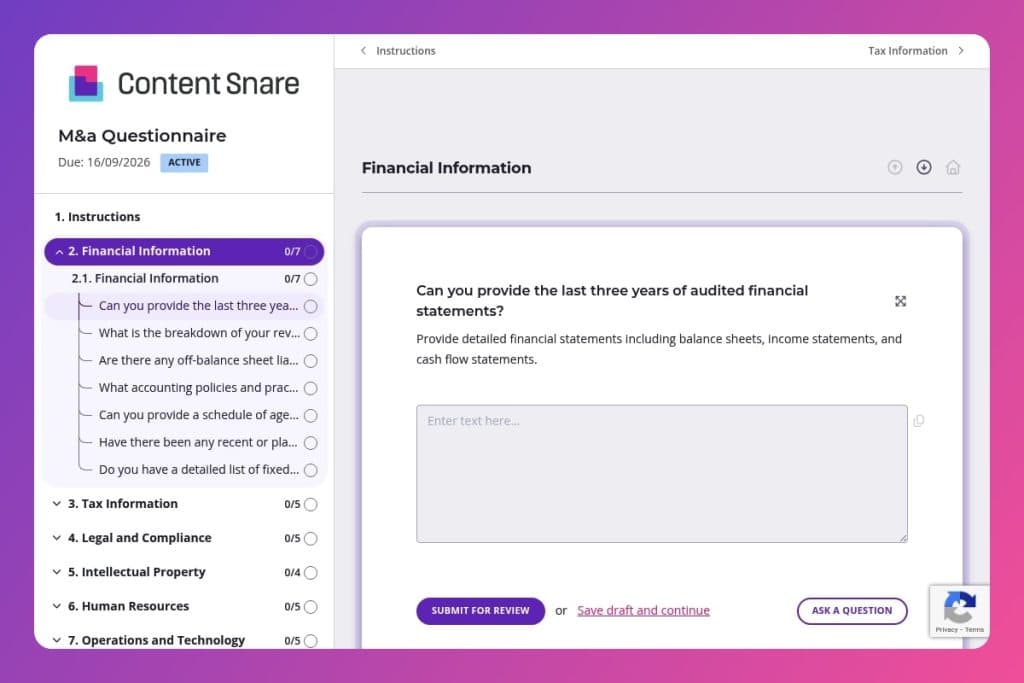


A comprehensive due diligence questionnaire that collects financial statements, tax records, legal contracts, intellectual property details, HR policies, and operational data needed to evaluate an acquisition target.

Accounting firms and financial advisors conducting M&A due diligence for clients pursuing acquisitions, mergers, or investment transactions.

During the early due diligence phase after initial deal interest is established but before finalizing valuation, deal structure, and purchase agreements.
Your client just announced they're acquiring a competitor. The CEO needs answers - fast. Revenue breakdowns, tax liabilities, pending lawsuits, employee contracts, and environmental risks all need verification before the deal closes. Chasing down this information through endless email threads and spreadsheets? That's where deals stall and red flags get missed.
An m&a questionnaire streamlines the entire due diligence process. You'll collect critical financial, legal, and operational data in one organized place - reducing back-and-forth and ensuring nothing falls through the cracks. This post covers what an effective M&A questionnaire should include, practical tips for customizing it to different deal types, and a free template to get you started. Let's dive in.
Financial Information
Use these to validate historical performance, quality of earnings, and working capital dynamics.
Tax Information
Confirm tax posture, exposures, and value of tax attributes.
Legal and Compliance
Assess litigation exposure, contract landscape, and regulatory posture.
Intellectual Property
Establish ownership, scope, and defensibility of core IP.
Human Resources
Map workforce composition, cost structure, and key-person risk.
Operations and Technology
Understand operating model, vendor dependencies, and systems landscape.
Environmental and Social
Identify environmental exposures and maturity of ESG practices.
Strategic Considerations
Clarify strategic direction, pipeline, and risk profile.
Pre-populate what you already know: Before sending the questionnaire, fill in basic information you've gathered from preliminary conversations - company structure, number of employees, or known product lines. This shows you've done your homework and reduces the burden on your client, making them more likely to complete the detailed sections like off-balance sheet liabilities and aged receivables schedules.
Prioritize document requests by deal timeline: Not all questions need answers on day one. Start with critical financial and legal items - audited statements, tax returns, pending litigation - that directly impact valuation and deal structure. Flag lower-priority sections like sustainability practices or community relations for later rounds. This phased approach keeps momentum going and prevents your client from feeling overwhelmed by a 50-point questionnaire.
Schedule a walkthrough call after submission: Once you receive responses, don't just file them away. Book a 30-minute review session to clarify ambiguous answers, especially around tax disputes, intellectual property licenses, or operational risks. These conversations often surface details that didn't make it into written responses - like informal supplier agreements or upcoming regulatory changes - that could materially affect the transaction.
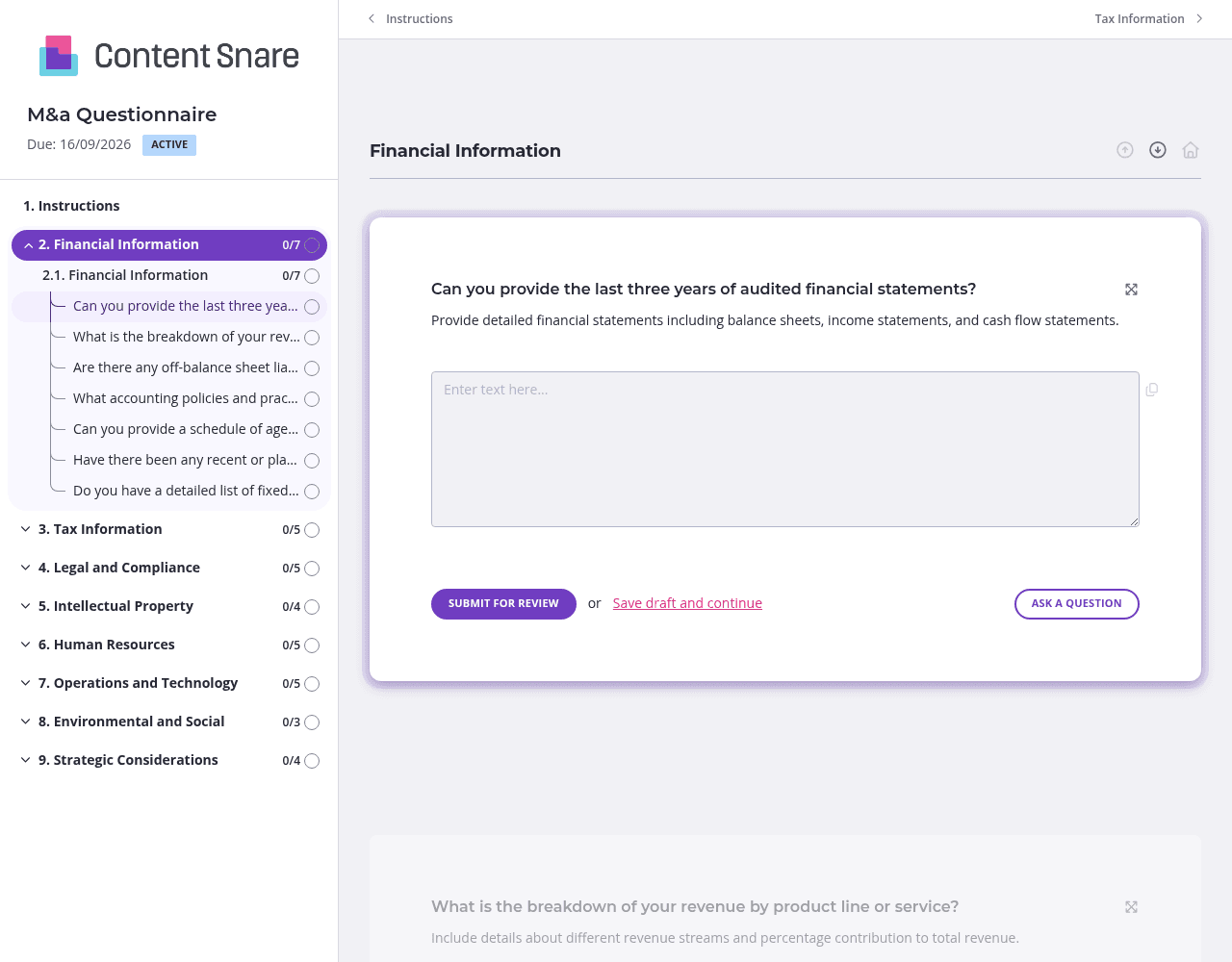
M&A due diligence covers a lot of ground - financial statements, tax audits, legal contracts, IP portfolios, HR policies. That's overwhelming in a single scroll.
Organize your questionnaire into separate pages: Financial Information, Tax & Compliance, Legal Matters, Operations & Technology, and Strategic Considerations. Your client tackles one section at a time, and you can track progress by category. They submit financials while legal gathers contract copies - parallel workflows that speed up the entire process.
"Provide all significant contracts" means different things to different people. Significant by dollar value? Duration? Strategic importance?
Use instruction fields to define your terms. Specify that "significant contracts" means any agreement over $100K annually or longer than three years. For complex requests like depreciation schedules or tax loss carryforwards, attach a sample screenshot or template showing the exact format you need. Clients get it right the first time, and you avoid the dreaded "Is this what you meant?" follow-up email.
You already know basic details - company name, business structure, number of employees, primary operations.
Delete those questions or pre-fill the answers before sending. Your client sees you've done preliminary research and focuses energy on what actually requires their input: hunting down audited financials, compiling IP registrations, or documenting environmental compliance. Less redundant work means faster turnaround and better-quality responses where it matters.
Tax returns, audited statements, and legal documentation can take weeks to locate. You need these items to move forward, but nagging clients daily strains relationships.
Configure reminder sequences that automatically nudge clients at strategic intervals. They'll receive friendly prompts without you having to send awkward "just checking in" emails. You maintain momentum on the deal while preserving goodwill - critical when you're managing multiple stakeholders across finance, legal, and operations teams.
Email chains lose attachments. Spreadsheets get outdated the moment someone sends version 2.0. Shared drives become messy filing cabinets where critical documents disappear into poorly labeled folders. Content Snare gives you a single, organized system where clients submit exactly what you need, you track what's missing, and nothing slips through the cracks.
Security matters when you're handling audited financials, tax returns, and sensitive legal documents. Content Snare is ISO 27001 certified and trusted by accounting firms worldwide - your clients can submit confidential information knowing it's protected to the highest standards.
The platform integrates with tools you already use, so M&A questionnaire responses flow directly into your workflow without manual data entry. Hundreds of 5-star reviews across G2, Capterra, and other platforms confirm what accounting professionals already know: this approach saves hours of follow-up time and delivers a more professional client experience.
This questionnaire is just one application. Accounting professionals also use Content Snare to:
The same structure that streamlines due diligence works across your entire practice.


