
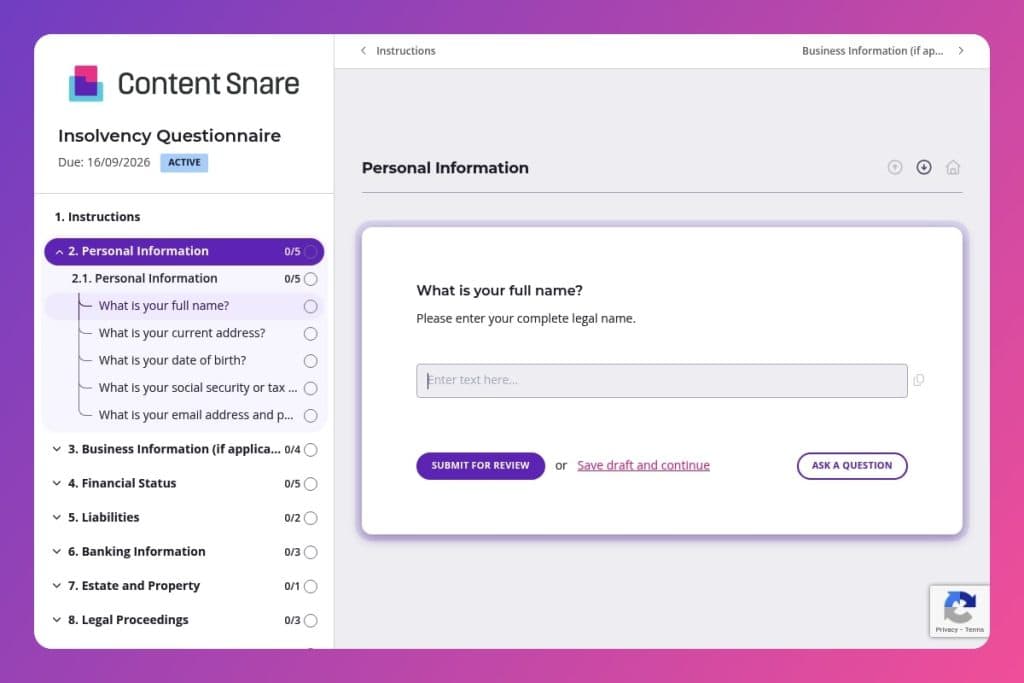


A comprehensive intake form that collects personal details, business information, assets, liabilities, creditor details, banking records, and legal history from clients facing potential insolvency.

Accounting professionals, insolvency practitioners, and financial advisors who assess client financial situations, prepare insolvency filings, and provide debt restructuring advice.

At the initial consultation stage when a client seeks insolvency advice, before conducting a formal assessment or filing any legal documents with courts or creditors.
Chasing down incomplete client information during an insolvency case wastes hours you don't have. Missing creditor details, unclear asset valuations, and scattered bank statements slow your assessment and put timely filings at risk.
An insolvency questionnaire solves this problem. It captures every critical detail upfront - from personal and business information to liabilities, assets, and legal history - so you can assess cases faster and advise clients with confidence. This post covers what to include in your form, how to streamline data collection, and a free template to get you started. Let's dive in.
Personal Information
Use these to verify identity, confirm jurisdiction, and set reliable contact details for notices and KYC.
Business Information (if applicable)
Capture business context to determine exposure, filing track, and asset/debt segregation.
Financial Status
Establish cash flow, burn, and asset base to assess insolvency tests and feasibility of proposals.
Liabilities
Map the liability stack, security interests, and litigation posture to rank claims and plan stakeholder communications.
Banking Information
Identify cash hubs and account types for immediate controls, tracing, and account freezes if needed.
Estate and Property
Catalog real property and encumbrances to gauge equity, sale potential, and stay implications.
Legal Proceedings
Surface prior filings and current actions to anticipate stays, deadlines, and disclosure requirements.
Insurance and Benefits
Note coverage and benefits that may fund administration, protect assets, or affect exemptions.
Future Considerations
Align post-process objectives and anticipated changes to tailor strategy and affordability metrics.
Additional Information
Give space for edge cases or upcoming events that could change the analysis.
Send a preparation checklist first: Before clients even open the insolvency questionnaire, email them a simple list of documents to gather - recent bank statements, mortgage details, creditor contact information, and asset valuations. This reduces back-and-forth and helps them complete the form in one sitting instead of abandoning it halfway through.
Break complex sections into digestible parts: The liabilities and assets sections can overwhelm clients quickly. Consider adding brief helper text that explains what counts as a "secured debt" or reminds them to include retirement accounts and vehicles in their asset list. Clear definitions prevent confusion and incomplete answers.
Schedule a quick walkthrough call: Offer a 15-minute call to review the form together, especially for clients unfamiliar with insolvency processes. Walk them through trickier questions like "alternative debt resolution processes" or help them estimate monthly expenses accurately. This builds trust and catches potential errors early.
Flag priority questions for immediate review: Once submitted, don't wait to review everything at once. Scan the legal proceedings and creditor sections first - pending lawsuits or imminent legal actions require urgent attention and could change your entire approach to the case.
Use responses to create a personalized action plan: Turn their answers into a clear next-steps document. If they've listed secured debts on real estate, outline what that means for their options. If they've filed bankruptcy before, explain how timing affects eligibility. Clients appreciate when you translate raw data into guidance they can actually use.
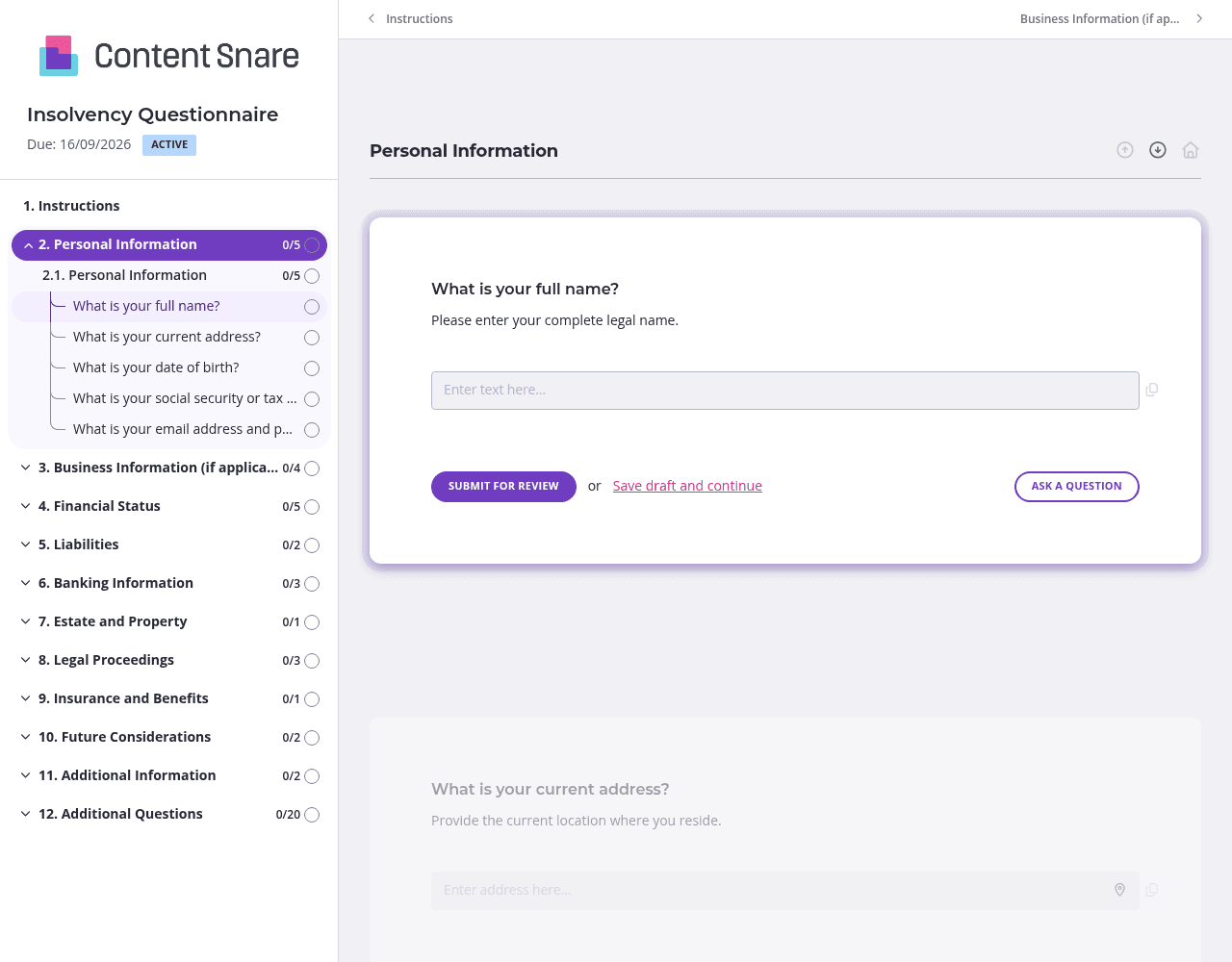
Insolvency questionnaires cover a lot of ground - personal details, business information, liabilities, assets, and legal history. Presenting 40+ questions on a single scrolling page intimidates clients before they even start.
Break the form into logical pages: one for personal information, another for financial status, a third for liabilities and creditors, and so on. Clients see their progress as they move through each section, which keeps them motivated to finish. They can also save and return to specific pages without losing their place.
Questions about secured debts, asset valuations, and alternative debt resolution processes confuse clients who aren't familiar with insolvency terminology.
Add instruction areas above or within these sections. Explain what counts as a secured debt (car loans, mortgages) versus unsecured debt. Clarify that asset values should reflect current market value, not what they paid originally. Include examples of alternative debt resolution like debt management plans or informal agreements with creditors.
Clear instructions mean fewer incomplete answers and less time spent on follow-up calls asking clients what they actually meant.
Insolvency situations often have deadlines - creditor actions, court dates, or payment negotiations that can't wait. You need completed questionnaires quickly, but chasing clients feels awkward and eats up your day.
Automatic reminders handle this for you. Content Snare sends gentle nudges to clients who haven't finished their forms, keeping cases moving without you playing the bad guy. You stay focused on analysis and strategy instead of tracking down missing information.
You already have basic client details - name, address, business name, contact information - in your practice management system or from initial consultations.
Prefill these fields before sending the questionnaire. Clients appreciate not re-entering information you already know, and it reduces the perceived length of the form. Shorter forms get completed faster, and you get the critical financial and liability details you actually need without delay.
Email attachments get lost. Shared documents create version control nightmares. Phone tag wastes hours chasing missing information. Content Snare eliminates these headaches with a purpose-built system for collecting client information - everything lives in one place, clients can't skip required fields, and you see exactly what's complete and what's outstanding at a glance.
Thousands of accounting firms worldwide trust Content Snare to streamline their client onboarding and data collection. The platform is ISO 27001 certified, so you can confidently handle sensitive financial data like tax identification numbers, bank statements, and creditor details. It integrates seamlessly with tools you already use, and clients get a professional branded experience that builds trust from the first interaction.
Insolvency questionnaires are just the beginning. Accounting professionals use Content Snare for:
The platform has earned hundreds of 5-star reviews across G2, Capterra, Trustpilot, and the Xero App Store. Firms appreciate how it transforms chaotic data collection into a smooth, repeatable process that saves time and improves client satisfaction.


