
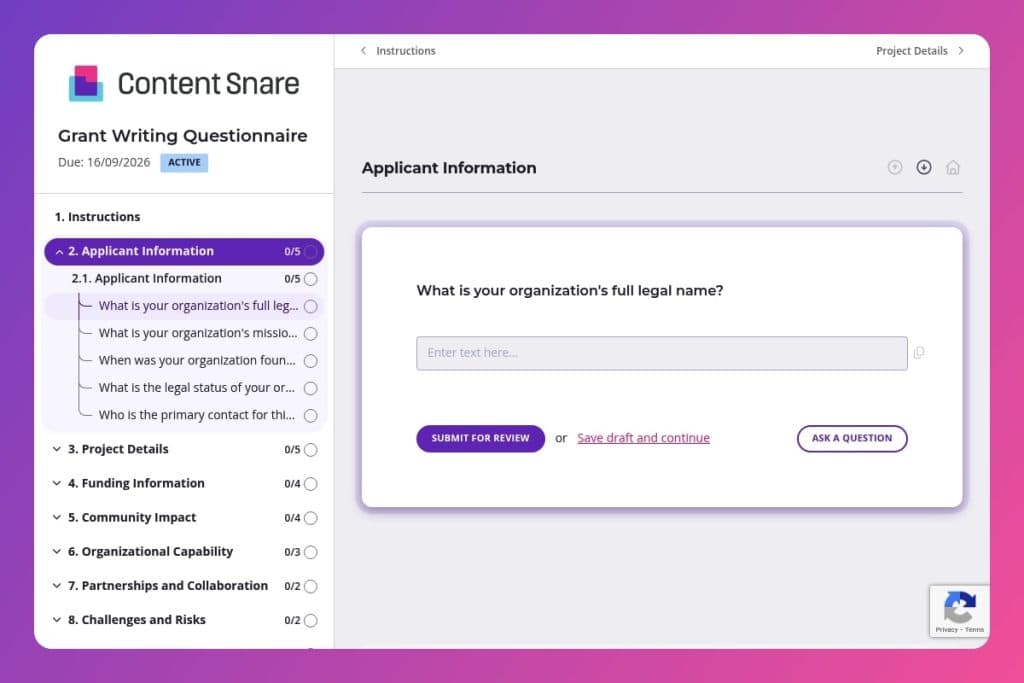


A structured intake form that collects all essential information needed for grant applications, including organizational details, project scope, budget requirements, community impact measures, and risk mitigation plans.

Grant writers, nonprofit administrators, consultants, and fundraising professionals who need to gather comprehensive information from clients or internal stakeholders before preparing funding proposals.

At the very start of the grant writing process - before initial meetings or drafting begins - to collect foundational details and identify capability gaps or missing information early.
Grant applications fail most often because of one thing: missing or unclear information. Funders need specifics about your mission, budget, timeline, and impact measures - but gathering these details from multiple stakeholders is chaotic and time-consuming.
A grant writing questionnaire solves this. It's a structured form that collects every critical detail upfront - from legal status and funding amounts to beneficiary numbers and risk mitigation plans. This post covers what makes an effective grant writing questionnaire, practical tips for deploying it across your team, and a free template you can customize immediately. Let's dive in.
Applicant Information
Capture legal identifiers and the primary contact so you can vet eligibility and streamline follow-up.
Project Details
Pin down scope, goals, timeline, and geography to frame alignment with funder priorities.
Funding Information
Establish budget, ask size, co-funding, and sustainability to shape a credible financing narrative.
Community Impact
Document beneficiaries, scale, outcomes, and evaluation to evidence need and impact.
Organizational Capability
Verify capacity through team credentials, relevant experience, and proof of performance.
Partnerships and Collaboration
Clarify external roles and stakeholder support to bolster feasibility.
Challenges and Risks
Surface foreseeable obstacles and mitigation plans to show due diligence.
Additional Information
Allow space for supporting materials and any context that strengthens the case.
Send the form before your first meeting: Get applicants to complete the basics - legal name, mission statement, contact details, and project summary - ahead of time. You'll spend your actual conversation digging into impact and strategy instead of collecting administrative facts.
Break complex budget questions into stages: Organizations often struggle with the funding section because they haven't finalized their numbers. Let them submit what they know first, then schedule a follow-up specifically for budget details, sustainability plans, and confirmed co-funding sources. It's easier than stalling the entire application.
Use responses to identify red flags early: Pay close attention to the organizational capability section. If an applicant can't cite past projects or relevant team experience, you'll know exactly where they need support - or whether they're ready for this grant at all.
Turn submitted answers into your first draft: Don't start from scratch. Copy their project goals, beneficiary numbers, timeline, and impact measures directly into your grant narrative. You're not just collecting information - you're building the skeleton of the proposal itself.
Circle back on the challenges section: Most applicants rush through risk mitigation questions or leave them vague. After submission, have a candid conversation about realistic obstacles and how you'll address them together. Funders appreciate honesty, and this follow-up makes your risk management far more credible.
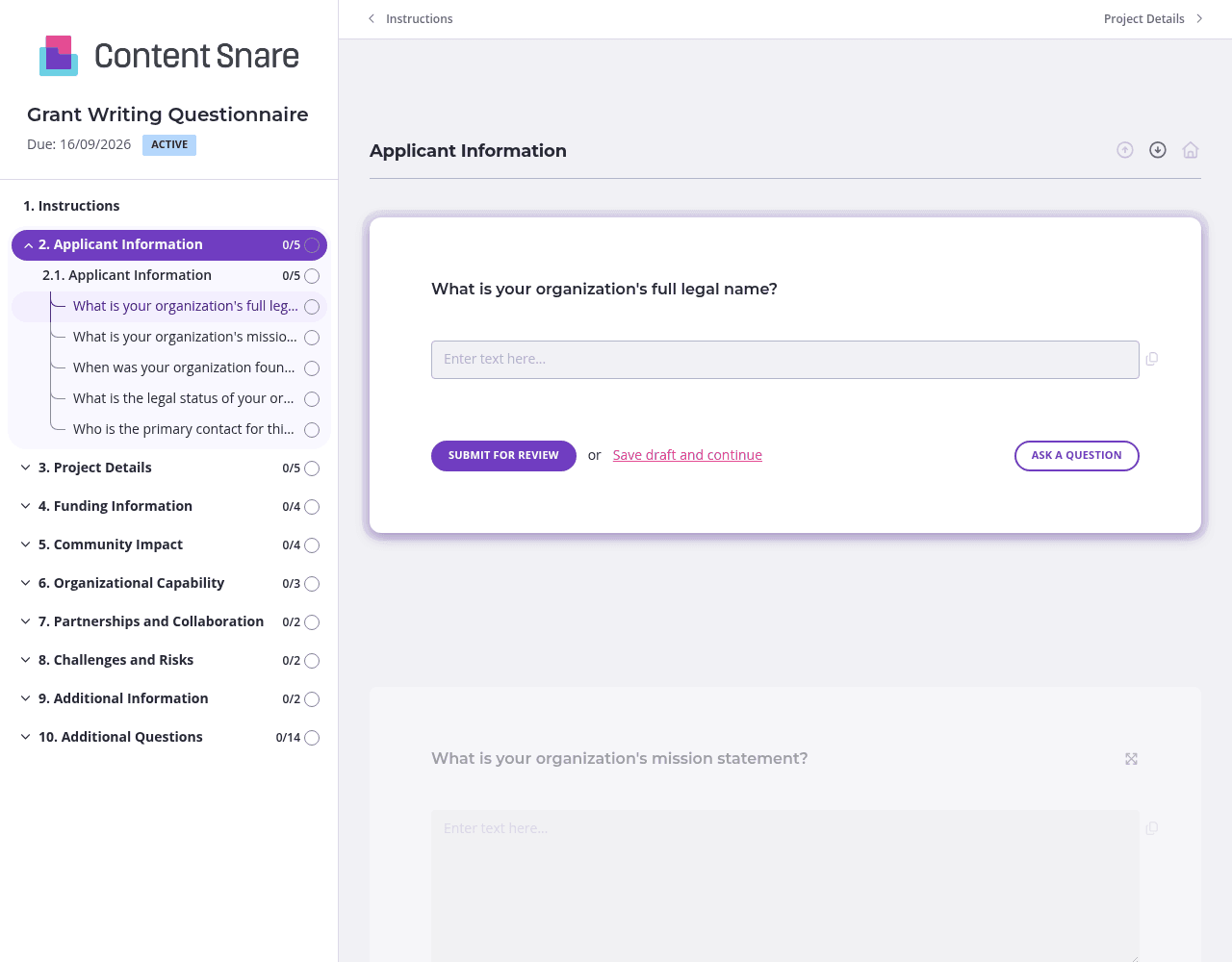
Grant applications are overwhelming when presented as one endless scroll. Organize your grant writing questionnaire into distinct pages - Applicant Information, Project Details, Funding Information, Community Impact, and so on. Clients can tackle one section at a time, save their progress, and return when they have the right information or stakeholder input. It makes a complex process feel manageable.
The budget section trips people up every time. Add clear instructions above questions like "What is the total budget for this project?" to specify whether you want itemized breakdowns, rounded figures, or estimates. Same goes for the organizational capability questions - clarify what "relevant experience" actually means with a quick example. Clients get it right the first time, and you avoid endless back-and-forth clarifications.
You likely have basic details on file - organization name, contact information, mission statement from previous conversations. Pre-fill those fields before sending the form. It saves your clients time and shows you're paying attention. They can focus energy on the hard stuff: articulating project goals, impact measures, and risk mitigation strategies.
Grant deadlines don't wait, but applicants procrastinate. Automatic reminders nudge clients without you having to chase them down or feel like you're nagging. You stay on schedule, they stay accountable, and nobody resents the follow-up process.
Email chains and shared documents create chaos. Questions get buried, version control becomes a nightmare, and you're never sure what's actually been submitted. Content Snare eliminates the mess with a structured, trackable system that keeps everything in one place. Clients know exactly what you need, you can see progress in real time, and nothing falls through the cracks.
It's trusted by thousands of businesses worldwide and backed by hundreds of 5-star reviews on platforms like G2, Capterra, and Trustpilot. The platform is ISO 27001 certified, so sensitive organizational and financial information stays secure - critical when handling nonprofit budgets and donor data.
Grant writing questionnaires are just the start. You can use Content Snare for:
Content Snare integrates with the tools you already use - your CRM, project management software, cloud storage - so collected information flows directly into your workflow. No manual data entry, no duplicate work.


