
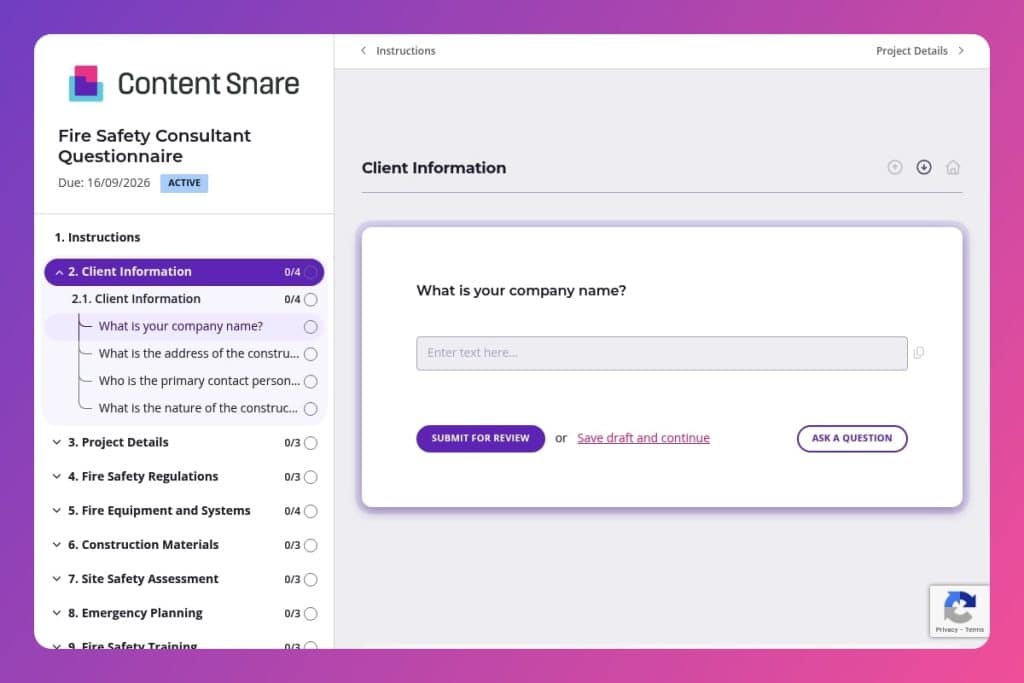


A comprehensive intake form that gathers essential project details, site specifications, fire safety compliance status, planned fire protection systems, construction materials information, and emergency protocols from construction clients before your initial consultation.

Fire safety consultants working with construction companies, general contractors, project managers, and building developers who need to assess fire safety compliance and provide expert guidance on commercial or residential construction projects.

Send this immediately after a client engages your services and before your first consultation, so you can review their regulatory compliance status, site layout, planned fire systems, and specific concerns to deliver a tailored assessment and proposal.
One overlooked permit. One non-compliant material. One missing evacuation route. Any of these could halt your construction project, trigger costly rework, or worse - put lives at risk. Fire safety compliance isn't optional, yet coordinating between contractors, authorities, and consultants often means critical details slip through the cracks.
A fire safety consultant questionnaire streamlines the entire process. It captures everything your consultant needs upfront - from site specifics and planned fire systems to materials compliance and emergency protocols - so you avoid back-and-forth delays and ensure nothing gets missed. This post covers what the form includes, how to use it effectively on your construction projects, and gives you a free template to get started. Let's dive in.
Client Information
Capture baseline client and site identifiers used for scoping, access coordination, and reporting.
Project Details
Establish physical and schedule parameters that determine risk profile, system demand, and inspection cadence.
Fire Safety Regulations
Confirm regulatory posture with the AHJ to anchor design assumptions and submission sequencing.
Fire Equipment and Systems
Document planned protection features to align calculations, device layouts, and integration testing with the project’s fire strategy.
Construction Materials
Record material choices to validate combustibility, fire-resistance ratings, and compatibility with the protection strategy.
Site Safety Assessment
Verify site-side controls during construction to manage temporary risks and coordinate interim measures.
Emergency Planning
Capture the interim evacuation strategy for the works to align with site phasing and partial occupancy conditions.
Fire Safety Training
Confirm workforce competence and planned refreshers to maintain readiness across changing crews and phases.
Collaboration and Support
Set engagement expectations so deliverables, touchpoints, and escalation paths are clear.
Additional Information
Leave space for project-specific nuances, drawings, or constraints not captured elsewhere.
Send it before the first consultation: Get the questionnaire to your client as soon as they engage your services. This gives them time to gather documentation like fire safety permits, approved plans, and material compliance certificates - details they won't have off the top of their heads. You'll walk into that initial meeting fully briefed, not scrambling for basics.
Request site layout drawings upfront: Ask clients to attach current construction site plans when they submit the form. The questions about emergency exits, muster points, and fire equipment locations make far more sense when you can visualize the space. This single attachment saves hours of follow-up emails and site visit confusion.
Flag the fire risk assessment question early: Many construction teams assume they've covered fire safety with general H&S protocols, but a dedicated fire risk assessment is distinct - and often legally required. If they answer "no" to whether one's been conducted, prioritize this in your response. It's the foundation everything else builds on.
Use their answers to customize your proposal: The collaboration section asks what specific concerns they want addressed and how your consultancy can help. Mine these responses when drafting your scope of work. A client worried about sprinkler system compliance needs different deliverables than one focused on worker training programs.
Schedule a follow-up call within 48 hours: Construction timelines move fast. Once you receive a completed form, reach out quickly to clarify any unclear responses - especially around materials compliance or planned fire systems. This shows responsiveness and catches potential issues before they become expensive problems on-site.
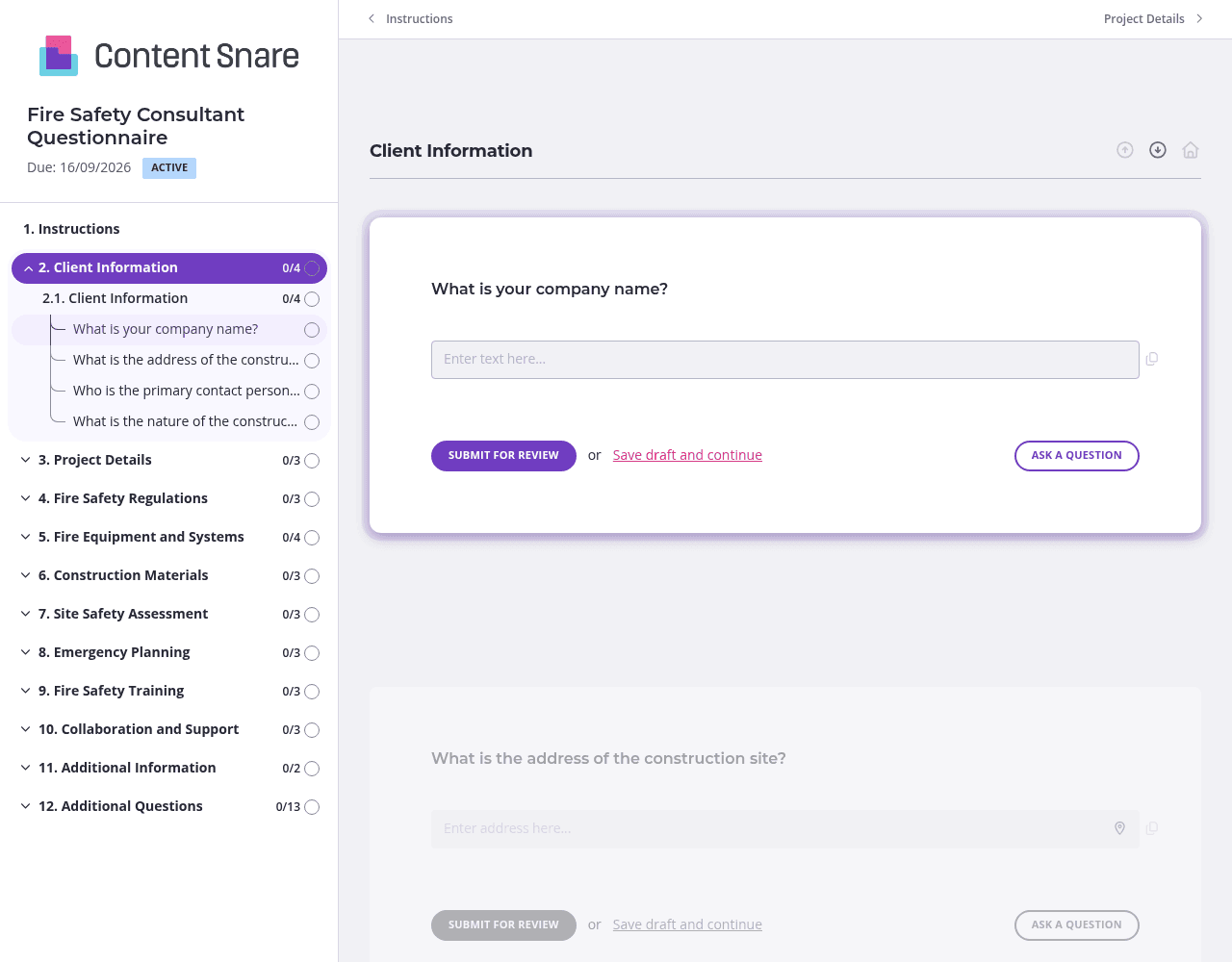
This questionnaire covers a lot of ground - from regulatory compliance to emergency planning to materials specifications. Don't overwhelm clients with one endless scroll. Split the form into logical pages: Client & Project Details, Fire Safety Regulations & Permits, Equipment & Systems, Site Safety & Emergency Planning, and Collaboration. Clients can tackle one section at a time, save their progress, and return when they've tracked down that approved fire safety plan or consulted with their site manager about sprinkler specifications.
Questions about fire risk assessments, materials compliance, and fire safety certifications often confuse clients who aren't fire safety experts - that's why they hired you. Add brief instruction text above these sections explaining exactly what you need. For "Has a fire risk assessment been conducted," clarify the difference between a general H&S assessment and a dedicated fire risk assessment. For materials compliance questions, include a line like "Check with your supplier for fire rating documentation" or link to relevant standards. Clear instructions mean fewer incomplete submissions and back-and-forth emails.
Not every construction project needs the same level of detail. Set up conditional questions based on project type and complexity. If a client indicates it's a single-story structure, you don't need to ask about smoke ventilation systems across multiple floors. If they select "renovation" rather than "new build," show questions specific to working within existing fire safety infrastructure. Clients only see what matters to their situation, making the form faster to complete and less intimidating.
Clients will inevitably skip the question about attaching their approved fire safety plan or forget to provide permit numbers. Set up automatic reminders that nudge them about incomplete sections without you playing enforcer. Construction projects move on tight schedules - automated follow-ups ensure you get what you need to start your assessment work without delays, and clients appreciate the helpful prompts rather than feeling chased.
Emails get lost and spreadsheets create version control nightmares. Phone calls miss critical details about fire safety permits or materials compliance. Content Snare replaces scattered communication with one organized system that tracks exactly what you've requested, what's been submitted, and what's still outstanding. Your clients get a professional experience, and you save hours chasing information.
Content Snare is trusted by thousands of businesses worldwide and has earned hundreds of 5-star reviews across G2, Capterra, and Trustpilot. It's ISO 27001 certified, so sensitive construction site data and regulatory documentation stay secure. The platform integrates with the tools you already use - your CRM, project management software, and document storage systems - making it fit seamlessly into your existing workflow.
This fire safety consultant questionnaire is just the start. Construction businesses use Content Snare to:
The platform is highly customizable, so you can adapt forms for structural engineers, environmental consultants, building inspectors, or any other Construction scenario where you need information from clients or partners.


