
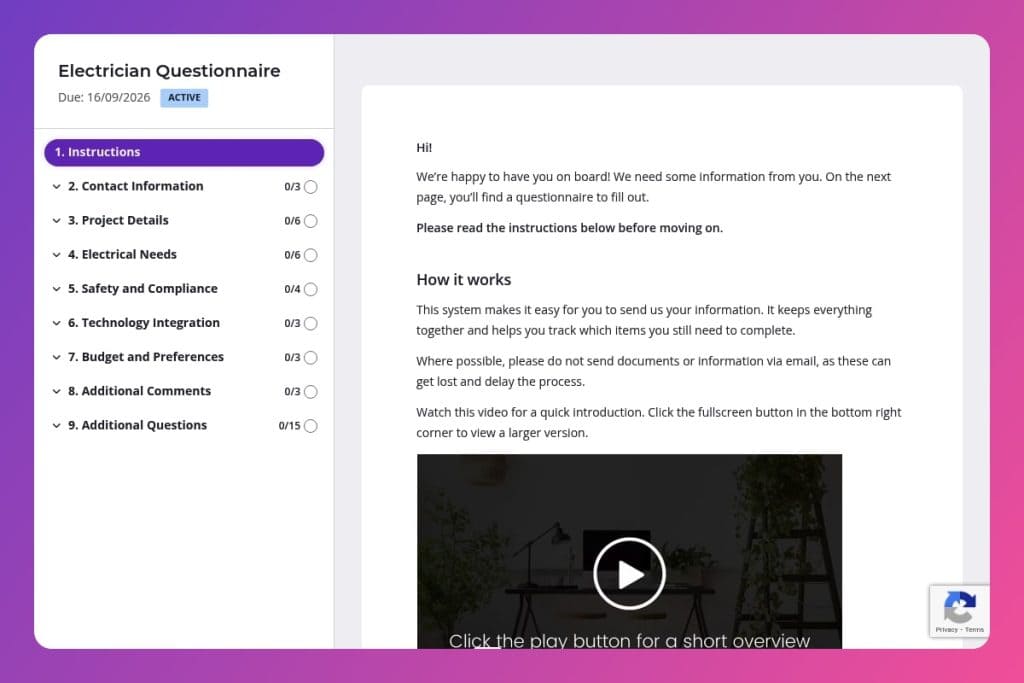


A pre-project intake form that captures electrical specifications, permit status, circuit requirements, technology needs, and safety considerations before work begins.

Electrical contractors, construction project managers, and general contractors who need detailed electrical requirements from property owners before scheduling consultations or creating quotes.

Send it 24-48 hours before initial client meetings to gather essential project details - from outlet counts and appliance wiring needs to smart home integration plans - so you can focus on solutions instead of basic fact-finding.
Miscommunication with electrical contractors costs construction projects thousands in rework and delays. A single missed detail about circuit requirements or permit status can derail timelines and blow budgets. The solution? An electrician questionnaire that captures every critical detail upfront - from power outlet specs to smart home integration needs.
This standardized form eliminates the back-and-forth emails and prevents costly assumptions. We'll walk you through what makes an effective electrician questionnaire, share practical tips for getting clients to complete it thoroughly, and provide a free template you can customize for your projects. Let's break it down.
Contact Information
Capture client contact and site details to route communications and schedule access.
Project Details
Define property context, scope, timeline, and permitting to align resourcing and compliance.
Electrical Needs
Detail load, distribution, and fixture counts to size circuits, panels, and materials.
Safety and Compliance
Surface constraints affecting code compliance, protection strategies, and accessibility.
Technology Integration
Clarify low-voltage and smart systems that influence wiring pathways and device selection.
Budget and Preferences
Set expectations on cost, brands, and flexibility to steer value engineering.
Additional Comments
Capture open items, logistics, and lead source to streamline scheduling and CRM updates.
Send it before the first meeting: Getting clients to complete the electrician questionnaire 24-48 hours before your initial consultation transforms that meeting from information gathering into solution building. You'll arrive knowing exactly how many dedicated circuits they need, whether permits are in hand, and if they're planning smart home integration.
Flag the "Additional Comments" section during your call: Most clients breeze past open-ended fields, but that's where gold hides. When you follow up, specifically ask if there's anything they didn't mention about existing safety issues, unusual appliances, or future expansion plans. One contractor discovered a client's plan to add a home workshop six months out - turning a simple outlet job into a much larger (and more profitable) panel upgrade project.
Cross-reference their timeline with permit requirements: If a client indicates they need work started in two weeks but hasn't obtained permits yet, address that gap immediately. Use their responses about project scope and property type to give them realistic expectations about approval timelines in your area, preventing frustration and schedule conflicts before the job even starts.
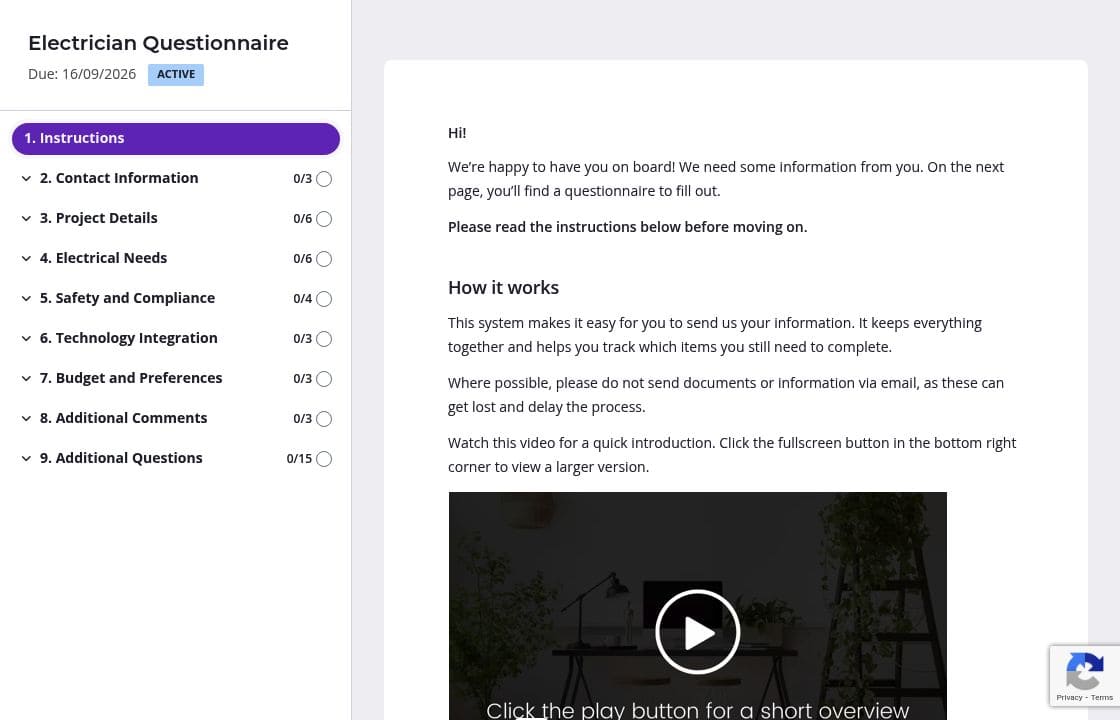
Your electrician questionnaire covers everything from basic contact details to smart home integration - that's a lot for clients to process at once. Split it into logical pages: one for project details, another for electrical needs, a separate page for technology requirements.
The "scope of electrical work" question is where clients get vague or overwhelmed. Add a brief instruction note with examples: "rewire entire second floor," "install kitchen outlets for new appliances," or "upgrade electrical panel from 100 to 200 amps." Same goes for the lighting fixtures question - include a simple note suggesting they walk through each room and count. Clear guidance upfront means fewer follow-up calls asking what they actually meant.
Clients often skip critical fields like "have permits been obtained?" or leave project dates blank. Configure Content Snare to send gentle reminder emails highlighting incomplete sections. You won't need to chase anyone down, and clients appreciate the nudge since electrical work typically has hard deadlines. The system does the nagging so you can maintain the relationship.
You've likely captured basic contact information and the property address during your initial inquiry call. Delete those questions or pre-fill the answers before sending the questionnaire. Clients move straight to the questions that actually require their input - outlet counts, lighting preferences, budget ranges. Less redundancy means faster completion and a better client experience.
Email threads and PDF forms create chaos on construction projects. Questions get buried, clients forget to answer critical details, and you waste hours following up. Content Snare eliminates the back-and-forth with a professional system that tracks exactly what's missing, sends automatic reminders, and keeps all client information organized in one place.
Thousands of businesses worldwide trust Content Snare to streamline their client intake process. The platform is ISO 27001 certified for security - critical when you're collecting sensitive project details and budget information. It integrates seamlessly with tools you already use, and hundreds of 5-star reviews across G2, Capterra, and Trustpilot confirm what users already know: it's the easiest way to collect information without the hassle.
Your electrician questionnaire is just the beginning. Construction professionals use Content Snare for:
The platform adapts to however you work, whether you're a solo electrician or managing multiple commercial projects simultaneously.


