
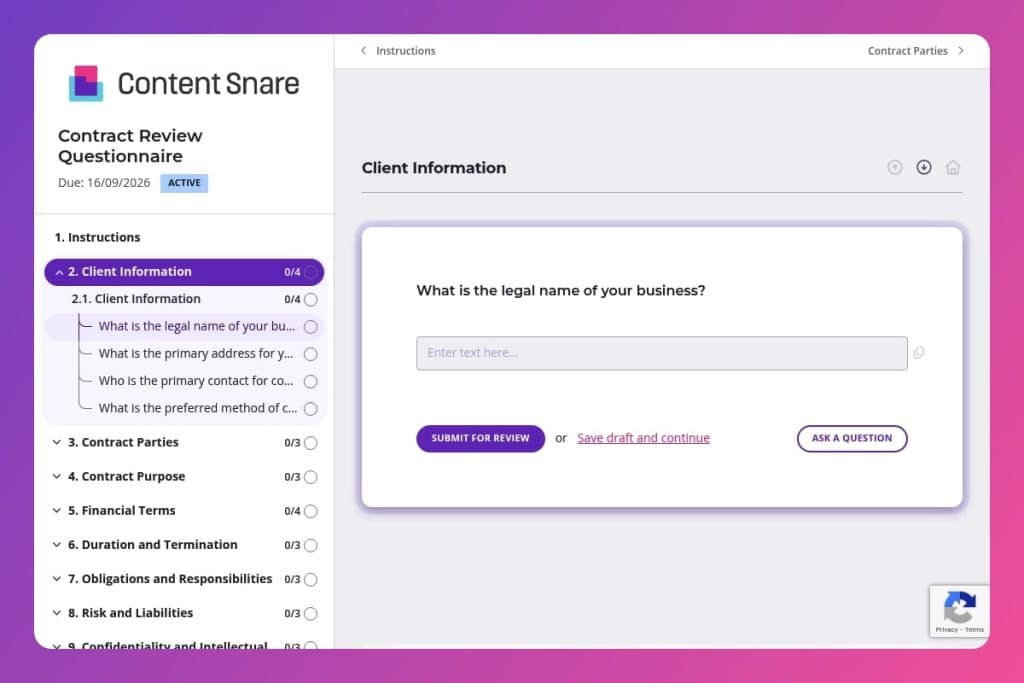


A structured questionnaire that systematically captures essential contract details including financial terms, risk allocation, obligations, confidentiality provisions, and dispute resolution mechanisms before finalizing client agreements.

Accounting firms and finance professionals who review client contracts and need to assess payment terms, tax implications, liability clauses, compliance requirements, and other revenue-impacting provisions.

Send this form during the contract negotiation phase after receiving a draft agreement and before final execution to ensure all critical financial and legal details are identified and addressed upfront.
How many revenue-impacting details slip through during contract reviews? Your accounting team juggles payment terms, tax implications, liability clauses, and compliance requirements - all while racing against deal deadlines. Miss a penalty clause or misinterpret indemnification terms, and your firm absorbs the financial consequences.
A contract review questionnaire gives you a structured system to capture every critical detail upfront. This post covers what makes an effective questionnaire, how to integrate it into your review workflow, and includes a free template you can customize. You'll learn how to systematically address financial terms, risk allocation, confidentiality provisions, and dispute resolution - so nothing falls through the cracks. Let's get started.
Client Information
Collect baseline client details and establish a reliable contact path for follow-ups.
Contract Parties
Identify all counterparties and confirm points of contact for coordination and notices.
Contract Purpose
Define scope and outcomes to focus the review on commercial intent and dependencies.
Financial Terms
Capture commercial terms that drive pricing, cash flow, and incentives.
Duration and Termination
Confirm term mechanics, exit rights, and renewal paths that affect continuity and leverage.
Obligations and Responsibilities
Map deliverables, responsibilities, and compliance duties to surface operational and regulatory risk.
Risk and Liabilities
Pin down risk allocation through liability, indemnity, and insurance frameworks.
Confidentiality and Intellectual Property
Clarify protections for confidential information, IP ownership, and any competitive restraints.
Dispute Resolution
Establish how disputes will be handled, governed, and enforced.
Amendments and Modifications
Define change control so scope and obligations evolve only through agreed processes.
Final Review
Surface unresolved concerns and ensure the document set is complete and accurate.
Additional Notes
Capture any context that could influence negotiation strategy or execution.
Send supporting documents with the form: Attach the draft contract as a PDF so clients can reference specific clauses while answering questions about financial terms, termination procedures, or liability provisions. They'll give you more accurate responses when they're not working from memory.
Pre-fill client information sections when possible: If you already have the legal business name, primary address, and contact details on file, complete those fields before sending. This shows you've done your homework and lets clients focus on the substantive contract questions that require their input.
Flag high-risk areas for detailed responses: When you reach sections like "Risk and Liabilities" or "Financial Terms," add a brief note asking clients to be thorough. A vague answer about indemnification clauses or penalty terms creates more work later - specificity here prevents costly surprises during execution.
Schedule a follow-up call before finalizing: Use the completed questionnaire as your meeting agenda. Walk through any unclear responses, especially around obligations, dispute resolution methods, or amendments procedures. This conversation often surfaces concerns clients didn't know how to articulate in writing.
Create a checklist from the "Final Review" section: Those last questions about missing attachments, undocumented changes, and lingering concerns are gold. Turn each response into action items you can track, ensuring nothing mentioned casually gets forgotten before contract signing.
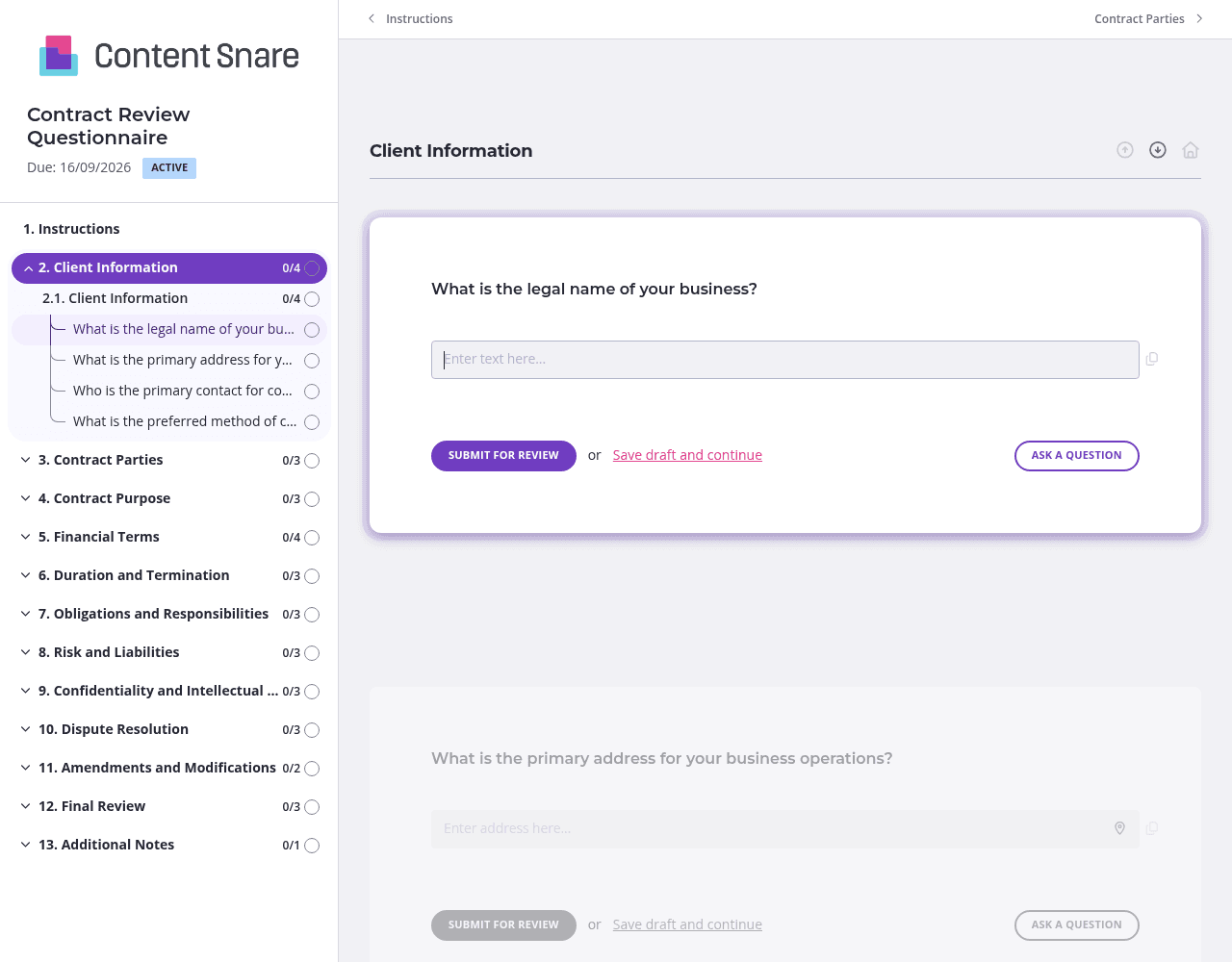
Contract reviews cover a lot of ground - from financial terms to dispute resolution to intellectual property. Organize your questionnaire into separate pages for each major topic area. Put "Financial Terms" on one page, "Risk and Liabilities" on another, and "Confidentiality and Intellectual Property" on a third. Clients can tackle one section at a time without feeling overwhelmed by a 40-question scroll.
The questions about liability clauses, indemnification terms, and payment penalties often confuse clients who aren't familiar with legal language. Use instruction fields to clarify what you're looking for. For the "Risk and Liabilities" section, add a brief note explaining the difference between limitation of liability and indemnification. For "Financial Terms," specify whether you need gross or net contract values. Clear guidance upfront means fewer incomplete answers and revision requests.
You already have your client's legal business name, primary address, and contact information in your system. Delete those questions entirely or pre-fill them before sending the form. Your clients can jump straight to the substantive questions about contract parties, obligations, and terms. This saves them time and signals you're organized and prepared.
Contract reviews happen during deal negotiations when everyone's juggling competing priorities. Content Snare sends automatic follow-ups to clients who haven't completed the questionnaire, so you don't need to track deadlines manually or send awkward reminder emails. You'll get responses faster without becoming the person who nags.
Email threads and Word documents weren't built for collecting detailed contract information. You lose track of which version is current, clients skip questions buried in paragraphs, and following up means manual reminders that make you feel like a nag. Content Snare gives you a purpose-built system where clients answer structured questions, you see exactly what's missing, and automatic reminders handle the follow-up.
Content Snare is ISO 27001 certified and trusted by accounting firms worldwide who need to handle sensitive financial and legal information securely. It integrates with the tools you already use and has earned hundreds of 5-star reviews across G2, Capterra, and Trustpilot.
Contract review questionnaires are just one application. Accounting firms use Content Snare for:
The platform adapts to however you work with clients - not the other way around.


