
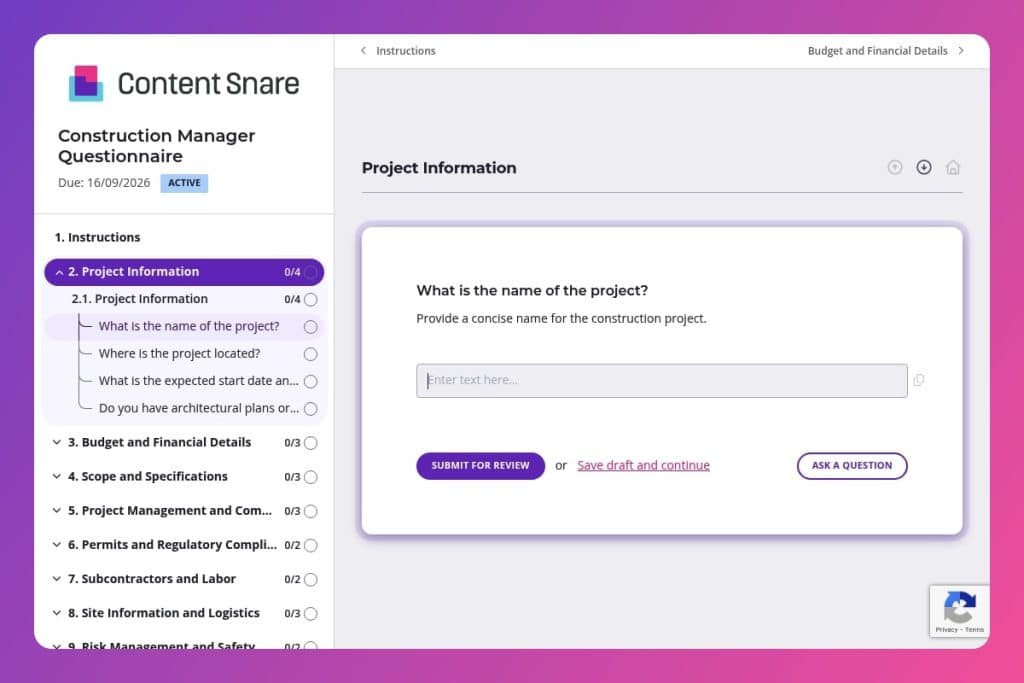


A pre-project intake form that captures essential details about scope, budget, permits, site logistics, safety protocols, and stakeholder expectations before construction begins.

Construction managers, general contractors, and project coordinators who need comprehensive project information from clients before mobilization and kickoff meetings.

Send 3-5 days before the initial kickoff meeting to gather critical planning details and transform client responses into your project roadmap and timeline.
You've just landed a major construction project. Now comes the hard part: aligning schedules, budgets, permits, subcontractors, and client expectations before the first shovel hits dirt. Miss a critical detail about site access, regulatory compliance, or material specifications, and you're facing costly delays and frustrated stakeholders.
A construction manager questionnaire eliminates the guesswork. This structured form captures everything upfront - project scope, financial milestones, safety protocols, and communication preferences - so you start with clarity instead of confusion. We'll walk you through what this form covers, share practical tips for maximizing its value, and provide a free template you can use immediately. Let's get started.
Project Information
These questions capture core project identifiers and documents to ground scheduling and early reviews.
Budget and Financial Details
These questions define funding parameters and cash flow constraints that drive proposal structure and risk posture.
Scope and Specifications
These questions lock down deliverables, material expectations, and compliance drivers.
Project Management and Communication
These questions establish decision pathways, update cadence, and tool compatibility.
Permits and Regulatory Compliance
These questions surface regulatory exposure and readiness to mobilize.
Subcontractors and Labor
These questions align sourcing strategy with client preferences and labor requirements.
Site Information and Logistics
These questions inform mobilization, site controls, and daily operations planning.
Risk Management and Safety
These questions calibrate contingency planning and HSE integration.
Quality and Performance Expectations
These questions define acceptance criteria and verification points.
Post-construction and Maintenance
These questions clarify lifecycle commitments beyond substantial completion.
Additional Information
These questions capture edge cases or gaps not covered elsewhere.
Send it before the kickoff meeting, not after: Get the construction manager questionnaire to your client at least 3-5 days before your first official meeting. This gives them time to gather critical details like permit status, architectural plans, and budget constraints. You'll walk into that meeting with answers already in hand, ready to discuss solutions instead of scrambling to collect basic project information.
Flag incomplete responses early, especially on budget and scope: Clients often skip financial milestones or leave scope descriptions vague ("major renovation" tells you nothing). Review submissions as soon as they come in and follow up on missing specifics - material preferences, sustainability requirements, or site access constraints. The earlier you clarify these details, the fewer change orders and budget surprises you'll face mid-project.
Turn responses into your project roadmap: Don't let completed forms sit in your inbox. Use the information to build your initial timeline, identify permit gaps, coordinate with preferred subcontractors they've listed, and set up the communication cadence they requested. When clients see their answers directly shaping the project plan, it builds trust and sets clear expectations from day one.
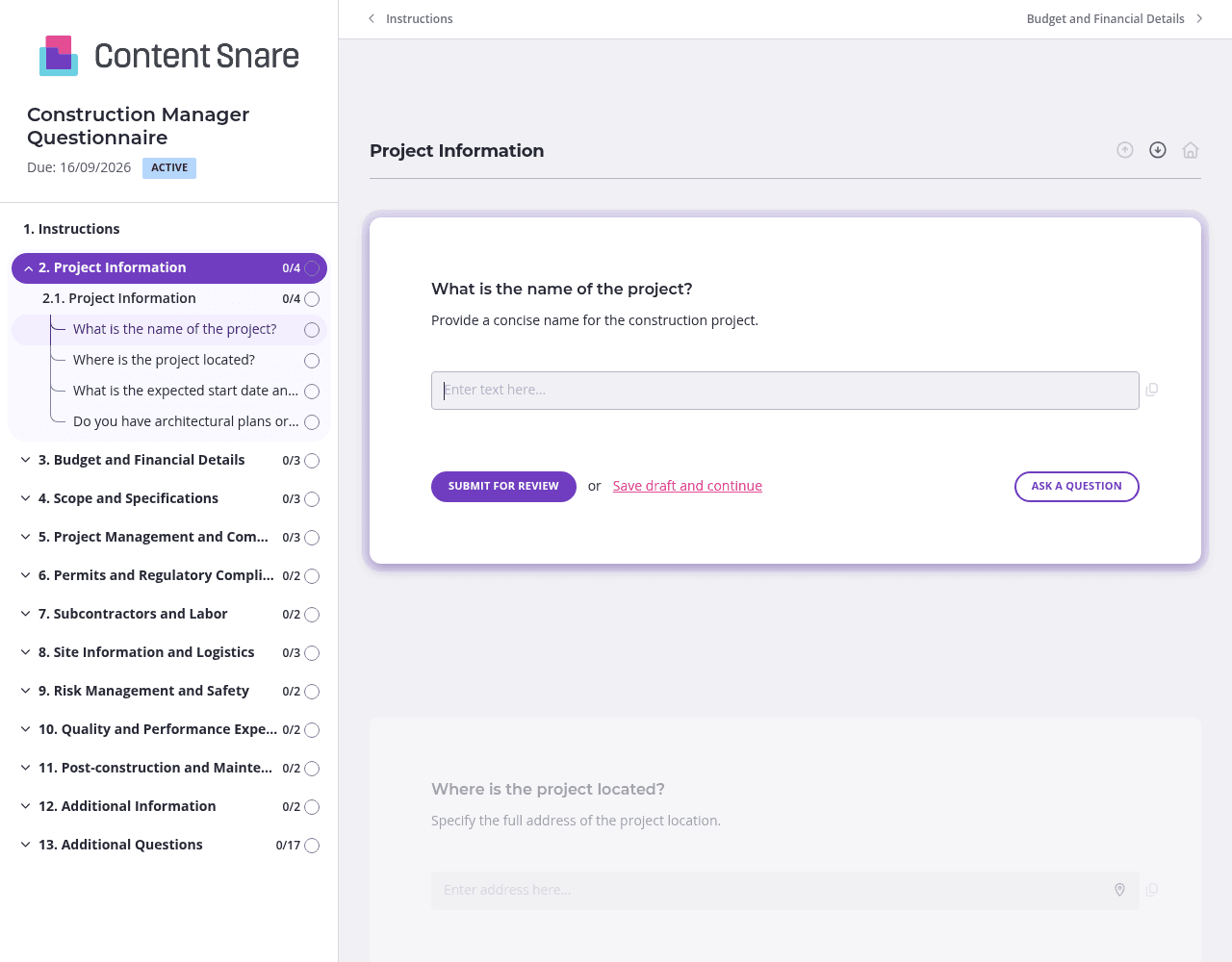
Construction projects involve dozens of moving parts. Group your construction manager questionnaire into logical pages - Project Overview, Budget & Financial Details, Site Logistics, Permits & Compliance, and Risk Management. Clients can tackle one section at a time instead of facing an overwhelming single page. They'll provide more complete answers when questions feel organized and manageable.
Clients stumble on specific questions every time: "What counts as scope?" or "Which permits do we actually need?" Use instruction areas to clarify expectations before they answer. Add a brief note explaining that scope should include square footage, number of floors, and major structural work. Attach a simple checklist of common permits for your region. Clear instructions mean fewer back-and-forth emails and more accurate first submissions.
You're managing multiple projects - chasing incomplete questionnaires shouldn't consume your day. Set up automatic reminders that nudge clients about missing information on budget constraints, permit status, or architectural plans. Reminders go out on your schedule, keeping projects moving forward while you focus on actual construction management instead of email tag.
You're working with a repeat client or already have their site address and primary contact details from a previous project. Delete those questions or pre-fill the information before sending the form. Clients appreciate not repeating themselves, and you'll get to the questions that actually matter - new scope requirements, updated budget figures, or changes in regulatory compliance.
Email chains and PDFs turn simple information gathering into chaos. Clients forget attachments, send partial responses, and you waste hours tracking down missing budget figures or permit documentation. Content Snare eliminates the back-and-forth. Clients answer questions in one organized location, you see exactly what's missing, and automatic reminders keep projects moving without awkward follow-ups.
Thousands of businesses trust Content Snare to collect critical information efficiently. It's ISO 27001 certified, so sensitive budget details and project specifications stay secure. The platform integrates with the tools you already use and has earned hundreds of 5-star reviews across G2, Capterra, and Trustpilot for making client collaboration painless.
Beyond pre-construction questionnaires, construction professionals use Content Snare throughout the project lifecycle:
Content Snare adapts to however your construction business operates. One system replaces scattered emails, making your entire client and vendor communication more professional and efficient.


