
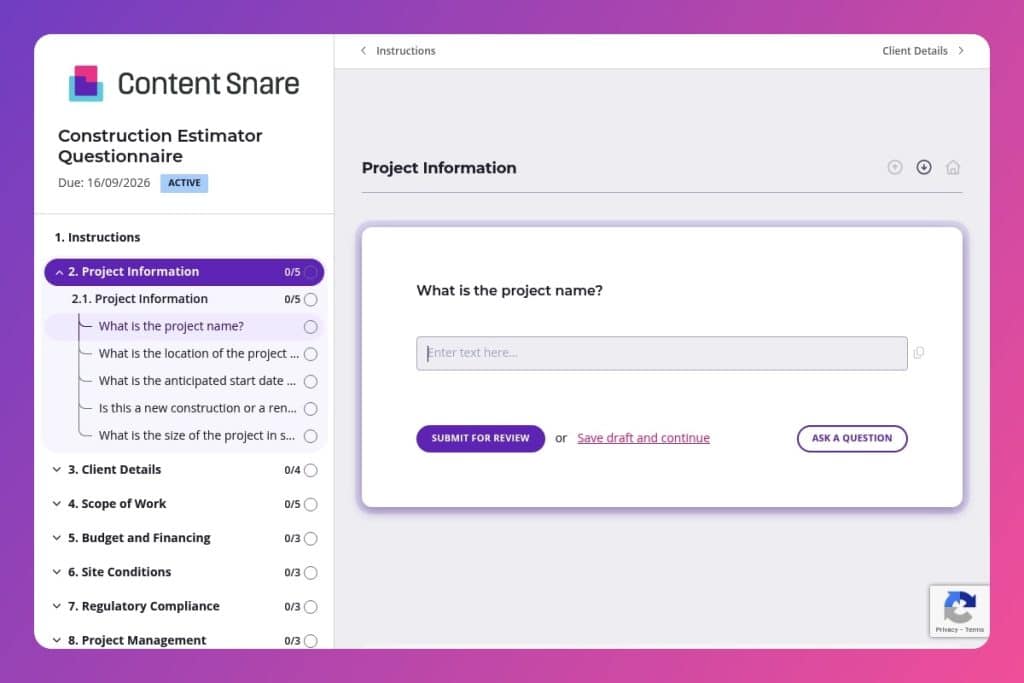


A detailed intake form that captures project specifications, site conditions, budget parameters, timelines, and regulatory requirements before creating a construction bid.

General contractors, specialty subcontractors, and construction estimators who need complete project information to prepare accurate quotes and avoid costly assumptions.

Send immediately after initial client contact and before conducting site visits, so you arrive prepared and can focus on complexities rather than gathering basic details.
Missed estimates cost contractors an average of 20% of project value - often because critical details get lost between initial conversations and final quotes. Unclear scope, forgotten site conditions, and vague client expectations turn what should be straightforward bids into costly guesswork.
A construction estimator questionnaire solves this problem by capturing every essential detail upfront. Instead of chasing clients for information or discovering deal-breakers mid-project, you gather everything you need in one structured form. This post covers what makes an effective construction estimator questionnaire, how to use it to win more profitable bids, and includes a free template you can customize. Let's break it down.
Project Information
This section captures baseline project parameters that drive scope and pricing.
Client Details
Capture the client’s core contact information for approvals and day-to-day coordination.
Scope of Work
Define the deliverables and technical expectations so takeoffs and assumptions are explicit.
Budget and Financing
Establish cost targets and funding status to align the estimate with financial constraints.
Site Conditions
Document physical and logistical constraints that impact means, methods, and contingency.
Regulatory Compliance
Confirm the permitting pathway and governing requirements that shape scope and schedule.
Project Management
Set communication lines and coordination expectations for smooth execution.
Timeline and Milestones
Outline sequencing expectations to test feasibility against labor, lead times, and seasons.
Risk Management
Surface known threats and contingency posture to calibrate allowances and exclusions.
Additional Services
Flag adjacent scopes that affect pricing and trade coordination.
References and Inspiration
Capture design intent and benchmarks to align scope and finish levels.
Feedback and Expectations
Clarify success criteria to steer assumptions, inclusions, and communication tone.
Send it before the site visit: Share the construction estimator questionnaire as soon as a lead expresses interest. Review their responses before you ever step on site, so you can spend that valuable face-to-face time addressing complexities rather than gathering basic project details like square footage or budget range.
Use the scope of work section to set boundaries early: Pay close attention to how clients describe the work and their material preferences. Vague answers here - like "high-end finishes" without specifics - are red flags. Follow up with clarifying questions before you quote, so you're not locked into assumptions that don't match their expectations.
Leverage site conditions and regulatory questions to uncover hidden costs: Clients often forget to mention environmental issues, zoning restrictions, or permit needs. These responses give you ammunition to flag potential delays or additional expenses upfront, protecting your margins and credibility.
Turn the timeline section into a reality check: If a client lists an aggressive completion date but mentions multiple phases with overlapping contractors, that's your cue to discuss feasibility. Use their answers to educate them on realistic schedules before they commit to unrealistic expectations.
Follow up with a summary document: After receiving the completed form, send a brief summary highlighting key details - budget, scope, timeline, and any concerns you've identified. This confirms you're aligned and creates a paper trail that protects both parties if the project evolves.
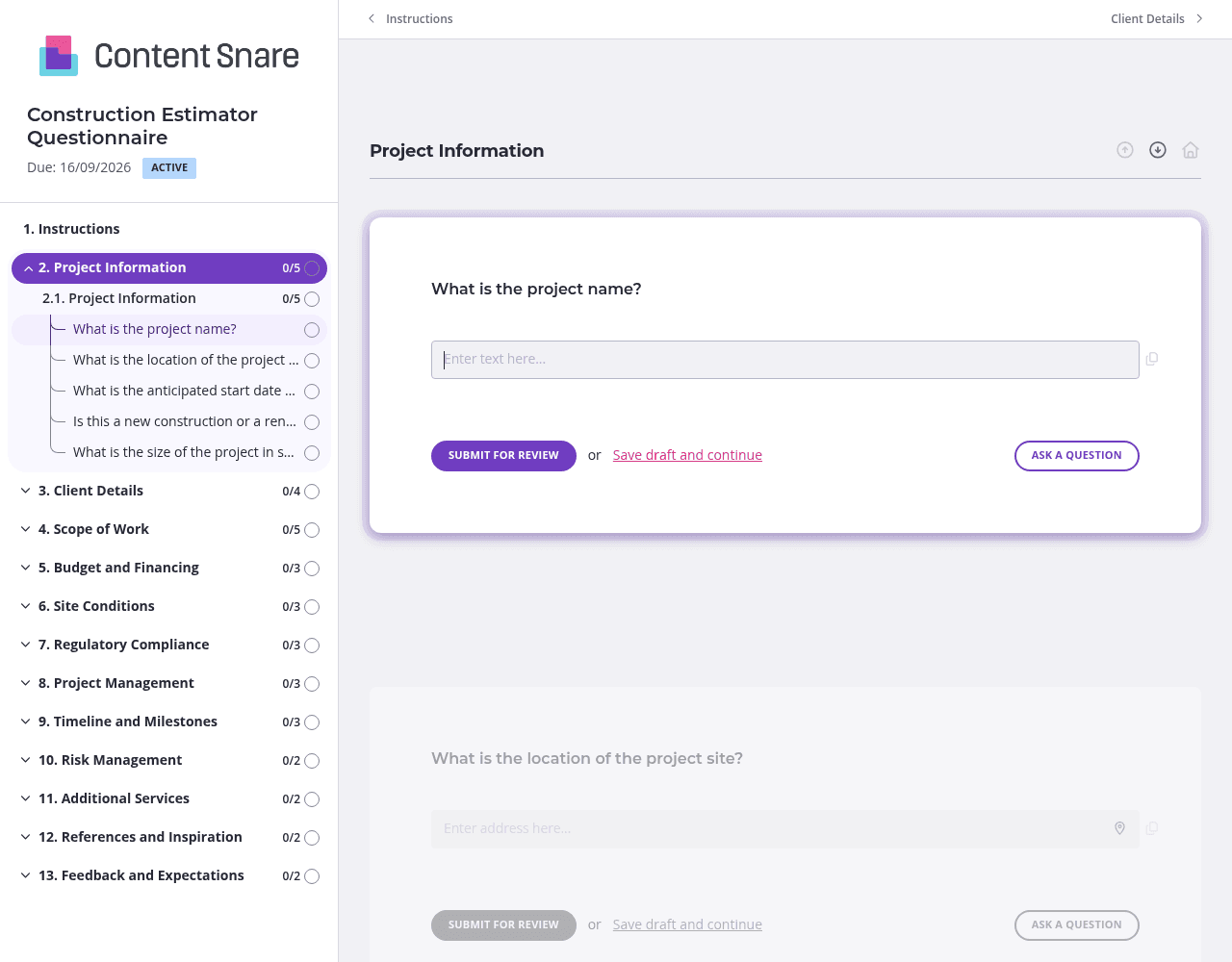
Construction estimator questionnaires cover a lot of ground - from site conditions to regulatory compliance to timeline expectations. Split your form into logical pages like "Project Basics," "Scope & Budget," and "Site Details." Clients can tackle one section at a time without feeling overwhelmed, and you'll get more complete responses because they're not staring down a massive list of questions.
The scope of work and site conditions sections are where clients often give incomplete answers. Add brief instructions above these question groups explaining exactly what you need. For example, under "Are there existing structures or utilities on the site?" include a note like "List all known utilities, easements, or structures that may affect construction access." Clear guidance upfront means fewer clarification emails later.
You've got multiple projects in flight - the last thing you need is to manually chase down incomplete questionnaires. Configure automatic reminders so clients get gentle nudges without you lifting a finger. No awkward follow-up calls, no lost opportunities because someone forgot to hit submit. The form does the nagging for you.
You already have their name, contact details, and maybe the project address from your initial conversation. Delete those questions or pre-fill the answers before sending the form. Clients appreciate not re-entering information you already know, and you'll get faster completion rates when the form feels tailored to them specifically.
Email threads and PDFs turn estimate gathering into a mess of version control, missed details, and endless follow-ups. Content Snare replaces that chaos with a structured, professional system that keeps projects moving forward. Clients get a clear form with exactly what you need. You get complete, organized responses without the back-and-forth.
Content Snare is trusted by thousands of businesses worldwide and has hundreds of 5-star reviews across G2, Capterra, and Trustpilot. It's ISO 27001 certified, so client data stays secure - critical when you're handling project budgets, site details, and sensitive financial information.
The platform integrates with tools you already use, from project management software to CRM systems. Everything flows seamlessly into your existing workflow.
This form is just one way construction professionals use Content Snare. You can also collect:
Content Snare adapts to whatever information you need to collect, keeping your construction business organized and professional at every stage.


