
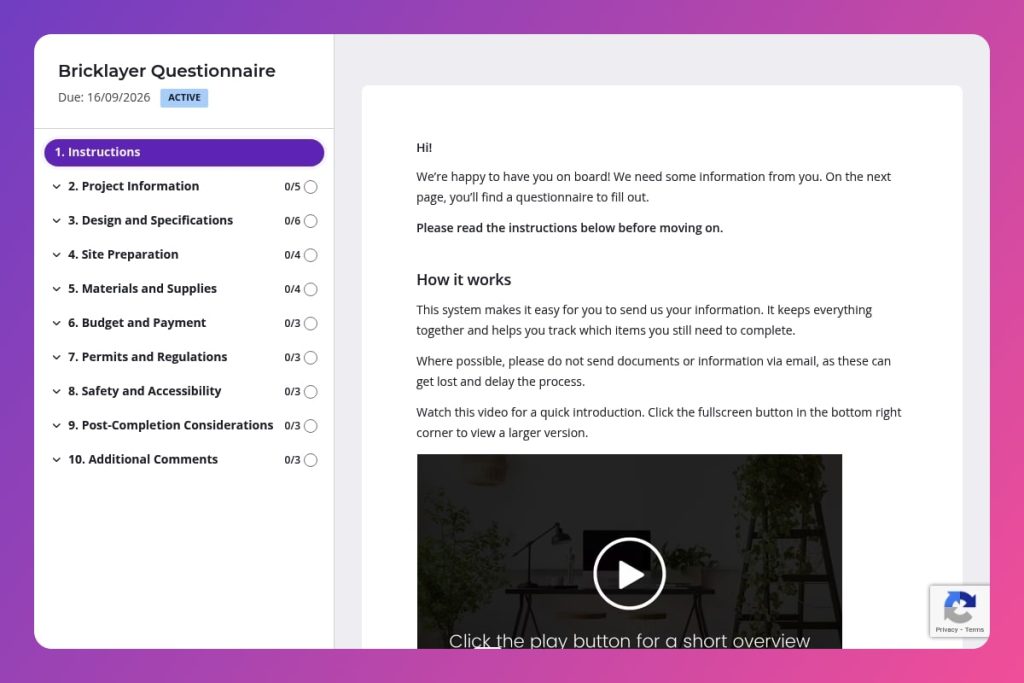


A pre-project intake form that captures site details, material specifications, timeline expectations, budget parameters, and regulatory requirements before bricklaying work begins.

Bricklayers, masonry contractors, and construction companies who need complete project information from clients to provide accurate quotes and avoid costly miscommunication during brick installation projects.

Send this form immediately after initial client contact and before conducting site visits or preparing formal proposals, so you arrive at the property with all necessary background information already documented.
60% of construction delays stem from poor upfront communication between clients and contractors. Mismatched expectations about materials, unclear timelines, and missing site details create costly rework and frustration on both sides.
A bricklayer questionnaire solves this problem before the first brick is laid. This simple form captures everything you need - project specs, site conditions, material preferences, budget parameters, and safety requirements - in one organized place. You'll discover what makes an effective questionnaire, how to customize it for different projects, and get access to a free template you can use immediately. Let's dive in.
Project Information
Capture site, schedule, and primary contact to anchor logistics and communication.
Design and Specifications
Define scope and technical parameters to drive estimating, sequencing, and quality outcomes.
Site Preparation
Understand access, existing conditions, and constraints to plan mobilization and preliminary works.
Materials and Supplies
Set procurement responsibilities and standards to align sourcing, lead times, and material performance.
Budget and Payment
Set financial guardrails and cashflow expectations.
Permits and Regulations
Confirm compliance landscape to avoid delays and rework.
Safety and Accessibility
Surface on-site risks and utilities to plan controls and resource needs.
Post-Completion Considerations
Clarify closeout requirements and service expectations.
Additional Comments
Give space for context that may affect scope, method, or timeline.
Send it before the site visit: Get the questionnaire completed ahead of your first meeting so you can walk the property with specific details already in mind. You'll spend less time clarifying basics and more time assessing actual conditions - especially useful for catching discrepancies between what the client described and what's really there.
Use photos to eliminate guesswork: Ask clients to attach photos of existing brickwork they want to match, the current site conditions, or any structures that need removal. A single image of their preferred brick pattern saves multiple back-and-forth conversations and prevents costly mistakes.
Flag budget early to avoid wasted proposals: The budget section isn't just a formality. If a client's expectations don't align with reality, you'll know immediately and can either adjust the scope or have an honest conversation before investing hours in a detailed quote.
Cross-reference permits with your local requirements: Don't assume the client knows what permits they need. Use their answers in the permits section as a starting point, then verify against local regulations yourself - it's your reputation on the line if work gets stopped mid-project.
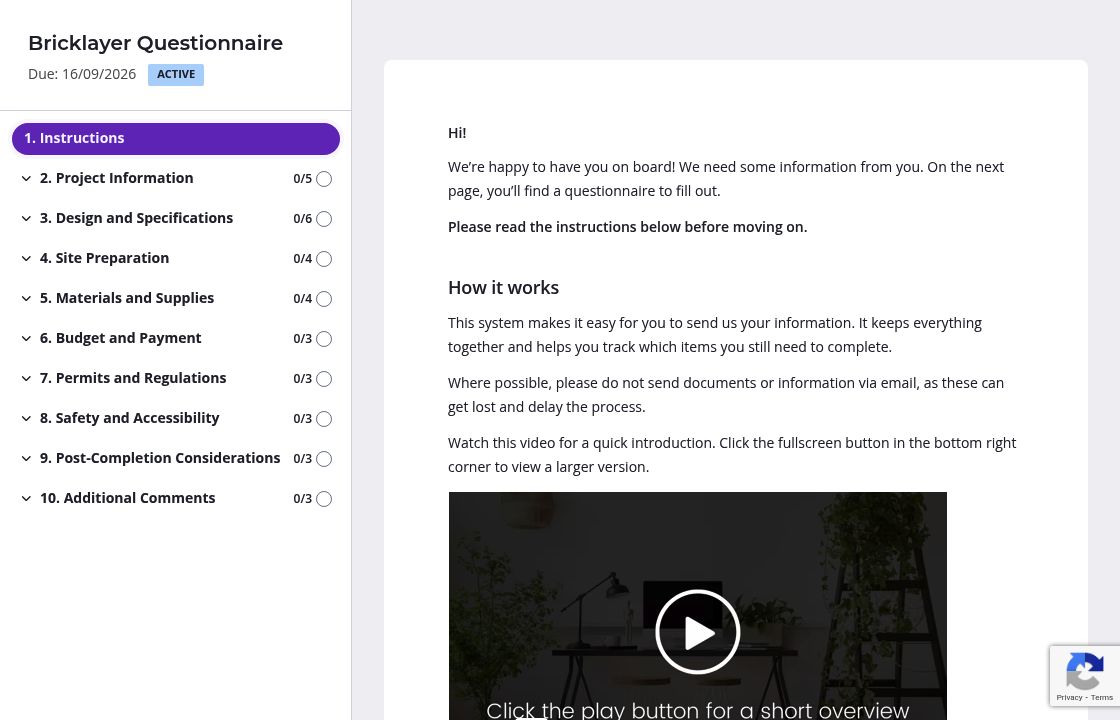
Construction projects involve multiple moving parts - site prep, materials, permits, budget, and safety. Split your bricklayer questionnaire into separate pages for each category instead of presenting one overwhelming list. Clients can focus on design specifications first, then move to site conditions, then budget. They're more likely to complete everything when it doesn't feel like a marathon.
The "design patterns or styles" question trips up many clients who don't speak construction language. Upload a quick photo showing common brick patterns - running bond, herringbone, Flemish bond - right above that question. Same goes for brick types and mortar finishes. Clients get it right the first time, and you avoid the "that's not what I meant" conversation later.
If a client says they'll supply their own materials, they don't need to answer questions about preferred suppliers or sustainability requirements. Set up logic so those questions disappear based on their answer. The form stays lean, clients don't waste time on irrelevant fields, and you look organized.
Clients forget. They get busy. They mean to finish the questionnaire but it slips down their inbox. Set up automatic reminders so Content Snare follows up every few days without you lifting a finger. You're not the bad guy - you're just the professional who uses a system that keeps projects moving.
Email chains and PDF forms create chaos. Clients lose attachments, forget what you asked for, and you waste hours chasing the same information. Content Snare eliminates the back-and-forth with a purpose-built system that tracks exactly what's missing, sends automatic reminders, and keeps everything organized in one place. Thousands of businesses worldwide trust it to collect information professionally - without the headache.
You maintain complete control over branding and workflow. Content Snare integrates with the tools you already use, so client responses flow directly into your project management system or CRM. ISO 27001 certified security means sensitive project details, budgets, and site information stay protected. Clients see a polished, professional experience that reflects your business standards.
The bricklayer questionnaire is just the beginning. Construction businesses use Content Snare for:
Content Snare adapts to however you work. Hundreds of 5-star reviews across G2, Capterra, and Trustpilot confirm what users already know: it's the simplest way to stop chasing clients and start delivering projects on time.


