
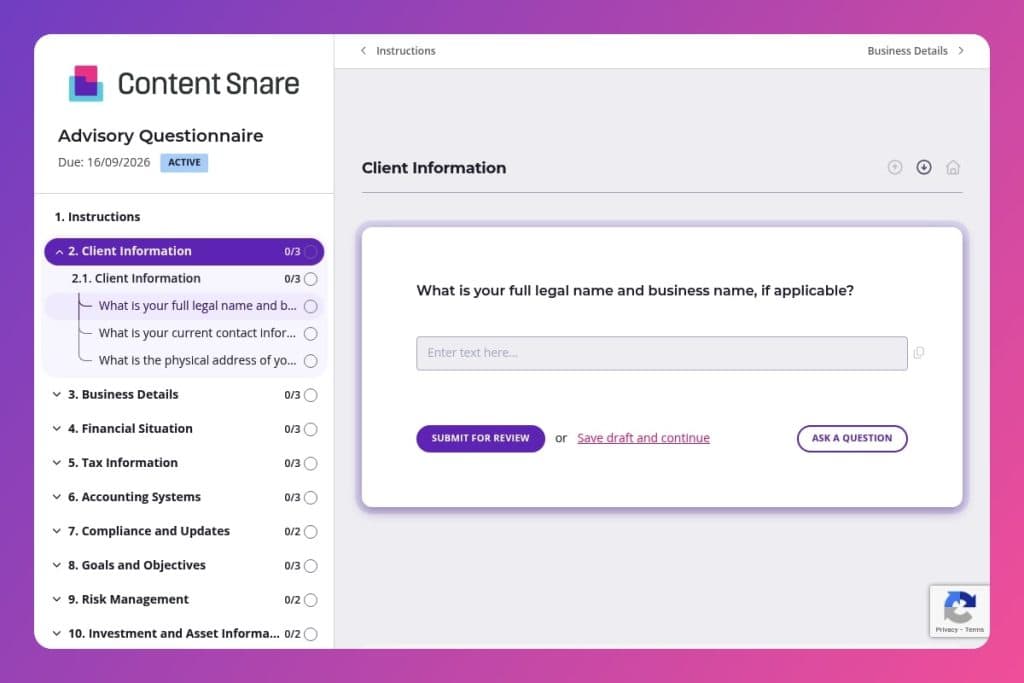


A structured intake form that captures client business details, financial situation, tax information, accounting systems, compliance status, goals, and risk factors before advisory consultations.

Accounting professionals and advisory firms who provide strategic financial guidance and need comprehensive client information to deliver tailored recommendations efficiently.

Send to new advisory clients 48 hours before initial consultations, or to existing clients when beginning new strategic engagements or annual planning cycles.
How much time do you waste chasing clients for basic information before you can even start advising them? Most accounting professionals spend hours going back and forth - tracking down entity details, financial statements, tax concerns, and goals - when they could be delivering high-value strategic guidance.
An advisory questionnaire solves this problem upfront. It captures everything you need in one structured form: client details, financial situation, compliance issues, goals, and risk factors. You'll learn how this form works, best practices for deployment, and get access to a free template you can customize. Let's dive in.
Client Information
Use these to verify identity and keep records current.
Business Details
Establish structure and operating context to frame advice.
Financial Situation
Anchor the engagement in current financials, budgeting discipline, and upcoming changes.
Tax Information
Surface priorities, historical filings, and exposure to shape tax strategy.
Accounting Systems
Map source systems and cadence to plan data intake and deliverables.
Compliance and Updates
Identify active issues and regulatory shifts that can affect recommendations.
Goals and Objectives
Align scope and metrics with what the client values most.
Risk Management
Capture material risks and current mitigations to calibrate controls and coverage.
Investment and Asset Information
Understand holdings and pipeline investments to coordinate analysis and tax.
Consultation Preferences
Set expectations for cadence and channels to streamline communications.
Additional Information
Give space for context that may not fit elsewhere.
Send it before the first meeting: Get the advisory questionnaire to new clients at least 48 hours before your initial consultation. You'll arrive prepared with their entity structure, current accounting systems, and key concerns already mapped out - turning that first meeting into a strategic session instead of an intake interview.
Frame it as a collaboration tool, not homework: When you introduce the form, explain that it helps you deliver better advice faster. Clients are more likely to complete sections on financial risks, compliance issues, and goals when they understand how their answers directly shape your recommendations.
Flag incomplete sections strategically: Not every client will attach financial statements or list all outstanding tax liabilities on the first pass. Follow up on critical gaps (like recent financial changes or compliance issues) before your meeting, but save minor details for live conversation. Prioritize what actually blocks your ability to advise.
Use their goals section as your roadmap: The short-term and long-term financial goals they share become your advisory agenda. Reference these directly in proposals, meeting recaps, and progress updates to show you're addressing what matters most to them.
Review consultation preferences immediately: Check their preferred communication methods and meeting frequency as soon as they submit. A client who wants monthly video calls has different expectations than one requesting quarterly email summaries - align your service delivery before mismatched expectations create friction.
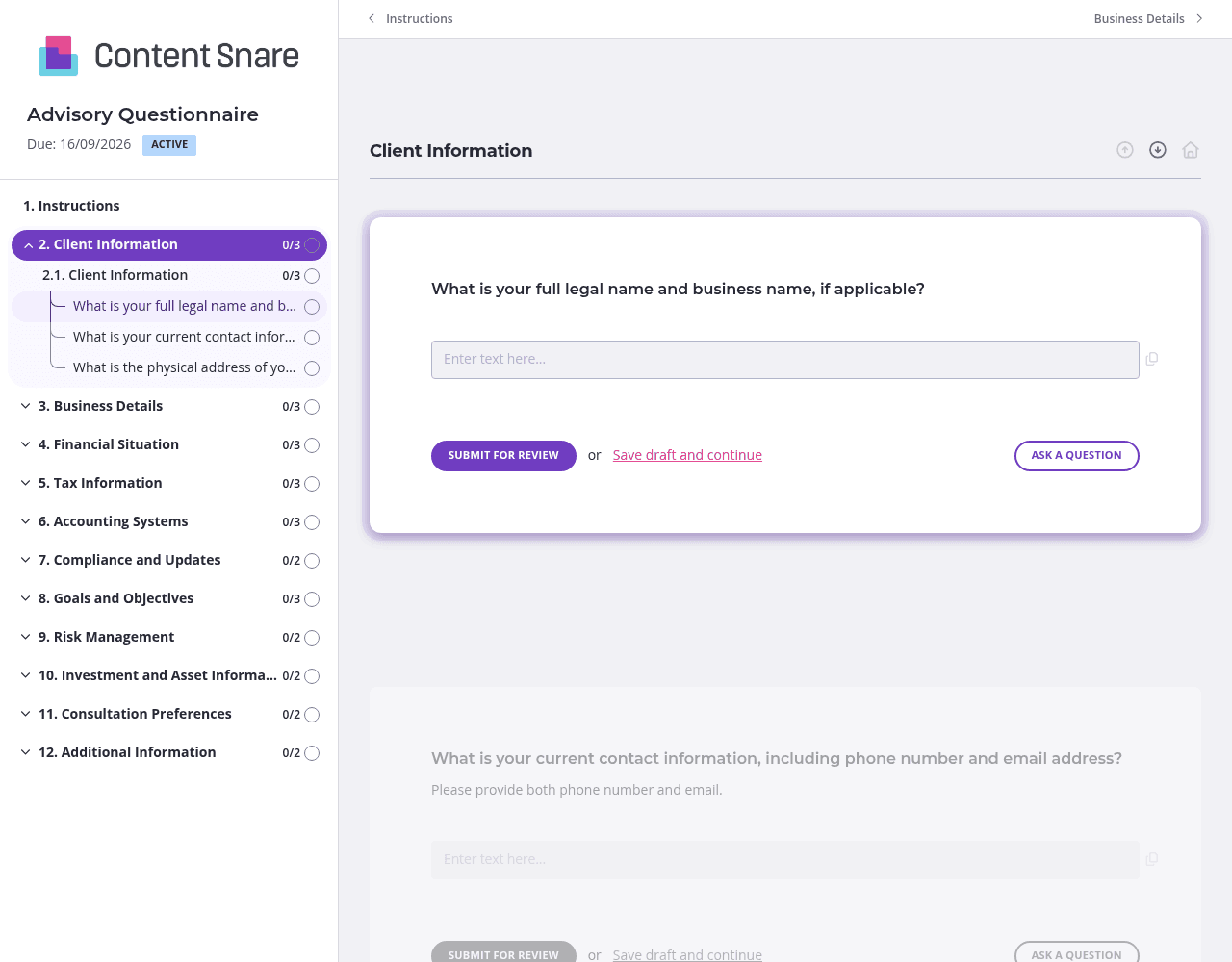
This advisory questionnaire covers a lot of ground - from business entity details to risk management and investment information. Split it into logical pages: one for client and business basics, another for financial situation and tax concerns, a third for systems and compliance, and a final page for goals and preferences. Clients won't feel overwhelmed by a wall of questions, and you'll get more complete responses when people can tackle one category at a time.
You likely have basic client information on file before sending this form - business name, contact details, entity type, or accounting software they're using. Delete those questions or prefill the answers so clients focus on what you actually need: their financial concerns, compliance issues, and advisory goals. It shows you've done your homework and respects their time.
The financial statements, tax returns, and budget documents clients submit make or break your advisory work. Add clear instructions above those questions: specify file formats you prefer, explain what "recent" means (last quarter? last fiscal year?), and note if you need signed copies versus drafts. A two-sentence instruction saves days of back-and-forth clarification.
Clients often skip complex questions about outstanding tax liabilities, compliance issues, or financial risks - exactly the information you need most. Automatic reminders keep the form moving without you playing collections agent. The system nudges them, you stay focused on advisory work, and nothing falls through the cracks.
You could use email, Word documents, or spreadsheets to gather advisory information - but you'll spend hours chasing attachments, deciphering incomplete answers, and reformatting data. Content Snare eliminates that friction with purpose-built forms that guide clients through each question, automatically follow up on missing information, and keep everything organized in one secure place. Thousands of accounting firms worldwide trust Content Snare to collect client information professionally and efficiently.
Content Snare is ISO 27001 certified, which matters when you're handling sensitive financial statements, tax returns, and business data. Clients can submit confidential information knowing it meets enterprise-level security standards.
The platform integrates with the tools you already use - your practice management software, cloud storage, and communication systems - so collected data flows directly into your workflow without manual transfers.
Content Snare has earned hundreds of 5-star reviews across G2, Capterra, Trustpilot, and the Xero App Store. Accounting professionals consistently praise how it transforms client onboarding from chaotic to streamlined.
This form is just one application. Accounting firms use Content Snare to collect:
The platform adapts to however you work with clients, turning every repetitive information request into a professional, trackable process.


