
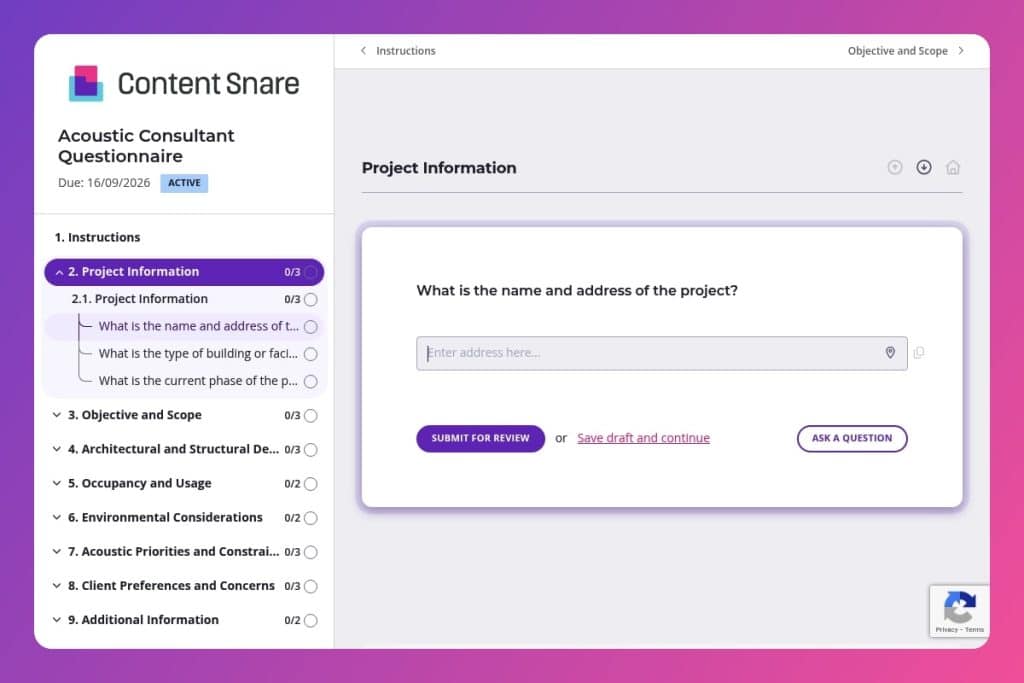


A structured intake form to collect project details, acoustic objectives, site conditions, architectural plans, regulatory requirements, and budget constraints before acoustic consulting work begins.

Acoustic consultants, construction project managers, architects, and building developers who need comprehensive technical information to assess soundproofing needs, noise control solutions, and compliance requirements.

Send this during initial project scoping - after a client expresses interest but before formal engagement - to gather all technical details, site documentation, and acoustic priorities needed to propose appropriate solutions and avoid costly rework.
A missed acoustics detail can derail an entire build - wrong materials specified, compliance issues flagged mid-construction, or worse, costly rework after handover. You need clear project requirements upfront, from structural plans and noise sources to budget constraints and regulatory standards. An acoustic consultant questionnaire streamlines this entire briefing process, helping you gather every critical detail before engagement begins.
This post covers what goes into an effective acoustic consultant questionnaire, how to use it to avoid miscommunication and delays, and where to find a free template you can customize. Here's what you need to know.
Project Information
Capture core identifiers and phase to anchor scope and scheduling.
Objective and Scope
Clarify performance targets and compliance drivers to frame criteria and deliverables.
Architectural and Structural Details
Collect current drawings and constructions to support modeling, detailing, and coordination.
Occupancy and Usage
Define use cases and activity patterns to set design criteria and background-noise assumptions.
Environmental Considerations
Document external noise context to inform facade, site planning, and compliance risk.
Acoustic Priorities and Constraints
Surface priorities, limits, and timelines to calibrate solutions and effort.
Client Preferences and Concerns
Capture stakeholder expectations and solution biases to reduce churn in options.
Additional Information
Confirm contacts and any supplemental material needed for analysis and coordination.
Send architectural drawings in advance: Before you distribute the questionnaire, ask clients to gather their architectural plans, structural details, and any existing noise assessments. This prep work means they can answer questions about materials, construction methods, and site conditions more accurately - and you'll get complete responses faster.
Clarify what "acoustic objectives" actually means: Many clients struggle with vague questions about priorities. When you send the form, include a quick note with examples: "Are you focused on speech privacy between offices? Reducing external traffic noise? Improving sound quality in a performance space?" Real-world scenarios help them articulate what they actually need.
Use the occupancy section to uncover hidden issues: Don't just accept "office space" as an answer. Follow up on intended activities, expected occupancy density, and noise-sensitive tasks. A call center has vastly different acoustic needs than a law firm, even if both are labeled "commercial office."
Flag budget constraints early: The section on budgetary limitations isn't just administrative - it shapes your entire approach. If a client indicates tight cost restrictions, you can propose phased solutions or prioritize critical areas rather than over-engineering your recommendations.
Schedule a brief review call after submission: Once the form comes back, book 15-30 minutes to walk through their responses together. You'll catch contradictions (like premium sound isolation requests paired with minimal budgets), clarify ambiguous answers about environmental noise sources, and build rapport before the formal consultation begins.
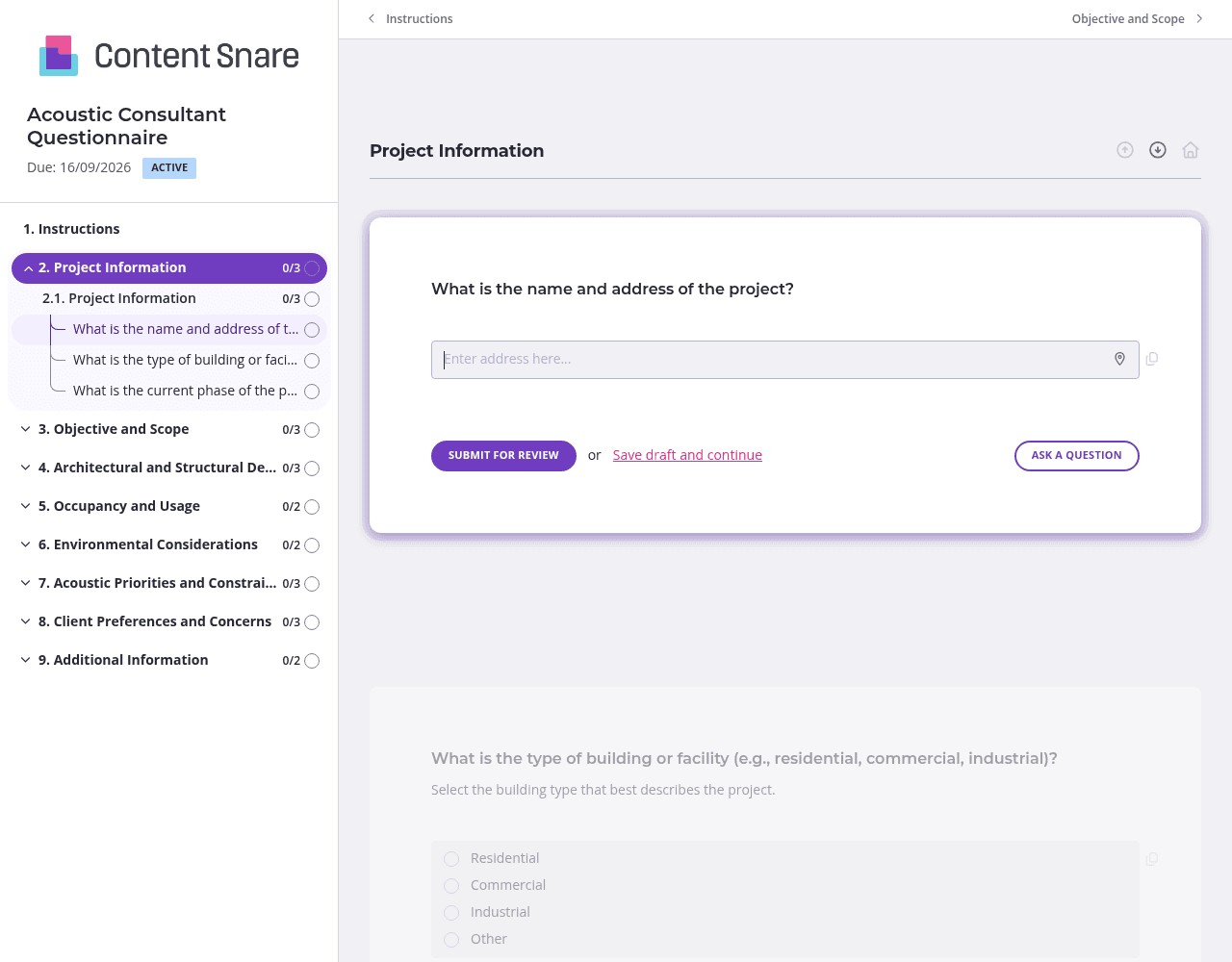
Acoustic consultations involve a lot of technical detail - architectural drawings, environmental noise sources, compliance standards, occupancy patterns. Don't overwhelm clients with everything at once. Use pages and sections to organize questions logically: start with basic project information, then move to objectives and scope, followed by technical details and priorities. Clients can complete one section at a time, save their progress, and return when they've gathered the necessary documentation.
Questions about building materials, structural features, and site noise sources can confuse clients who aren't acoustics experts. Upload annotated screenshots showing what "detailed architectural drawings" should include, or embed a short video explaining the difference between soundproofing and sound quality objectives. A simple diagram of common environmental noise sources (highways, rail lines, industrial zones) helps clients accurately identify what's affecting their site. The clearer your guidance, the fewer rounds of clarification you'll need.
You likely have basic project details from initial conversations - building address, project type, current phase, primary contact information. Prefill those answers before sending the questionnaire, or delete those questions entirely. Clients appreciate not repeating themselves, and you'll get faster responses when people only focus on the technical details you actually need: acoustic priorities, regulatory requirements, budget constraints, and site-specific challenges.
Clients get busy, especially during active construction or design phases. Set up automatic reminder emails so the questionnaire doesn't fall off their radar. You won't need to send awkward follow-ups, and clients get gentle nudges at intervals you control. This is particularly valuable when you're waiting on critical information - like environmental noise assessments or finalized architectural plans - that delays your entire consulting timeline.
Email threads and static PDFs make terrible data collection tools. Clients miss questions, send incomplete information across multiple messages, and you waste hours chasing details. Content Snare eliminates the back-and-forth. Clients see exactly what you need, you get organized responses in one place, and automatic reminders keep things moving without awkward follow-ups.
The platform is ISO 27001 certified and trusted by thousands of businesses worldwide to handle sensitive project information securely. It integrates with the tools you already use - your CRM, project management software, file storage systems - so everything flows into your existing workflow. You're not just collecting information faster; you're delivering a more professional client experience that builds trust from the first interaction.
This form is just one application. Construction professionals use Content Snare across their entire project lifecycle:
Content Snare has hundreds of 5-star reviews across G2, Capterra, and Trustpilot. Construction firms choose it because it's highly customizable to their specific workflows while remaining simple enough that clients actually complete the forms.


