
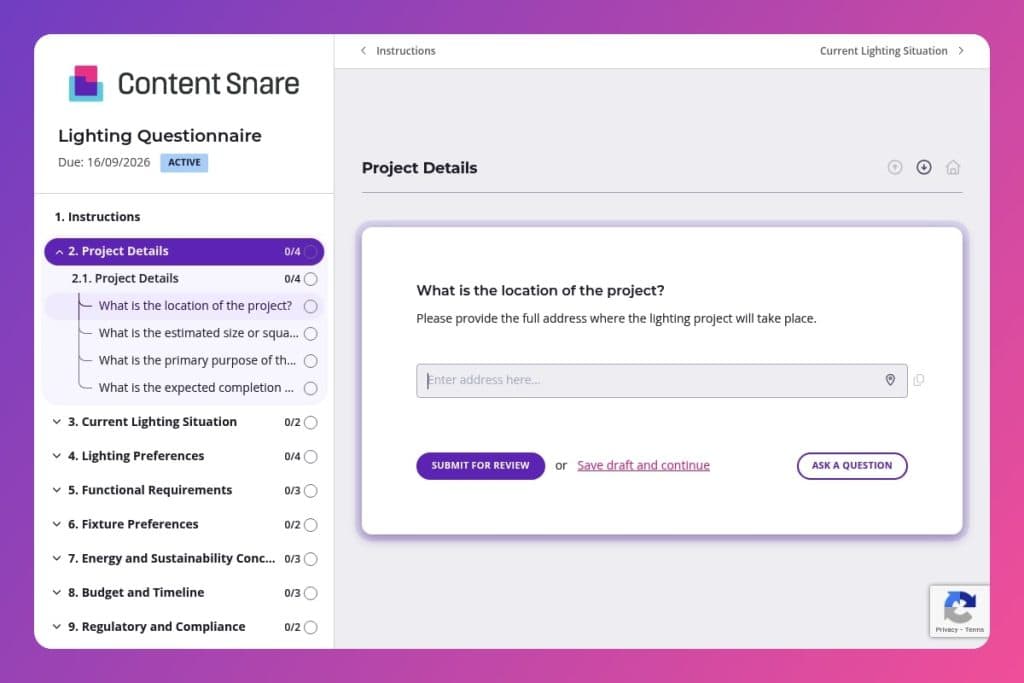


A structured questionnaire that captures all lighting requirements - space dimensions, ambiance preferences, fixture types, energy efficiency needs, and compliance standards - before you quote or order materials.

Electrical contractors, lighting designers, and construction project managers who need complete client specifications to avoid costly mid-project changes and rework.

Send it 48 hours before the initial site meeting so you arrive prepared with the right questions, can assess existing infrastructure accurately, and spot potential compliance issues on the first visit.
How many times have you walked a site only to discover the lighting spec doesn't match what the client actually needed? Misaligned expectations, vague briefs, and missing details cost you time, materials, and margin. One electrical contractor we spoke with estimated that poor upfront communication adds 15–20% to project timelines.
A lighting questionnaire solves this. It captures every critical detail - space size, ambiance goals, energy requirements, fixture preferences, and compliance needs - before you order a single fitting. This post walks you through what the form covers, how to use it with clients, and includes a free template you can customize. Let's dive in.
Project Details
Capture core parameters that drive load calculations, fixture counts, compliance path, and schedule.
Current Lighting Situation
Identify legacy constraints and pain points to prioritize replacements and quick wins.
Lighting Preferences
Document aesthetic intent and visual priorities to guide fixture selection, CCT/CRI targets, and placement.
Functional Requirements
Pin down performance needs that determine illuminance levels, controls, and distribution.
Fixture Preferences
Record fixture expectations to streamline specification options and samples.
Energy and Sustainability Concerns
Clarify efficiency objectives that shape source selection, controls strategy, and potential on-site generation.
Budget and Timeline
Align scope, phasing, and procurement with funding and milestones.
Regulatory and Compliance
Confirm codes and certifications early to prevent redesign and delays.
Additional Considerations
Surface cross-disciplinary needs and risks that impact integration and install sequencing.
Send it before the initial site meeting: Get the form to your client 48 hours before you walk the space together. You'll arrive knowing whether they need task lighting in a workshop or ambient lighting in a lobby, which means you can assess existing infrastructure and spot problems on the first visit instead of the third.
Use the energy and budget sections to guide product recommendations: Clients often say they want "energy-efficient lighting" without understanding the upfront cost difference between standard fixtures and smart LEDs with sensors. Their answers here let you prepare two or three tiered options - complete with ROI timelines - so the conversation becomes about value, not just price.
Flag regulatory gaps early: If their answers to building codes or certifications are vague or missing, follow up before you quote. A commercial kitchen has different requirements than an office, and discovering compliance issues mid-project derails schedules and erodes trust. A quick clarifying call after submission saves weeks of rework.
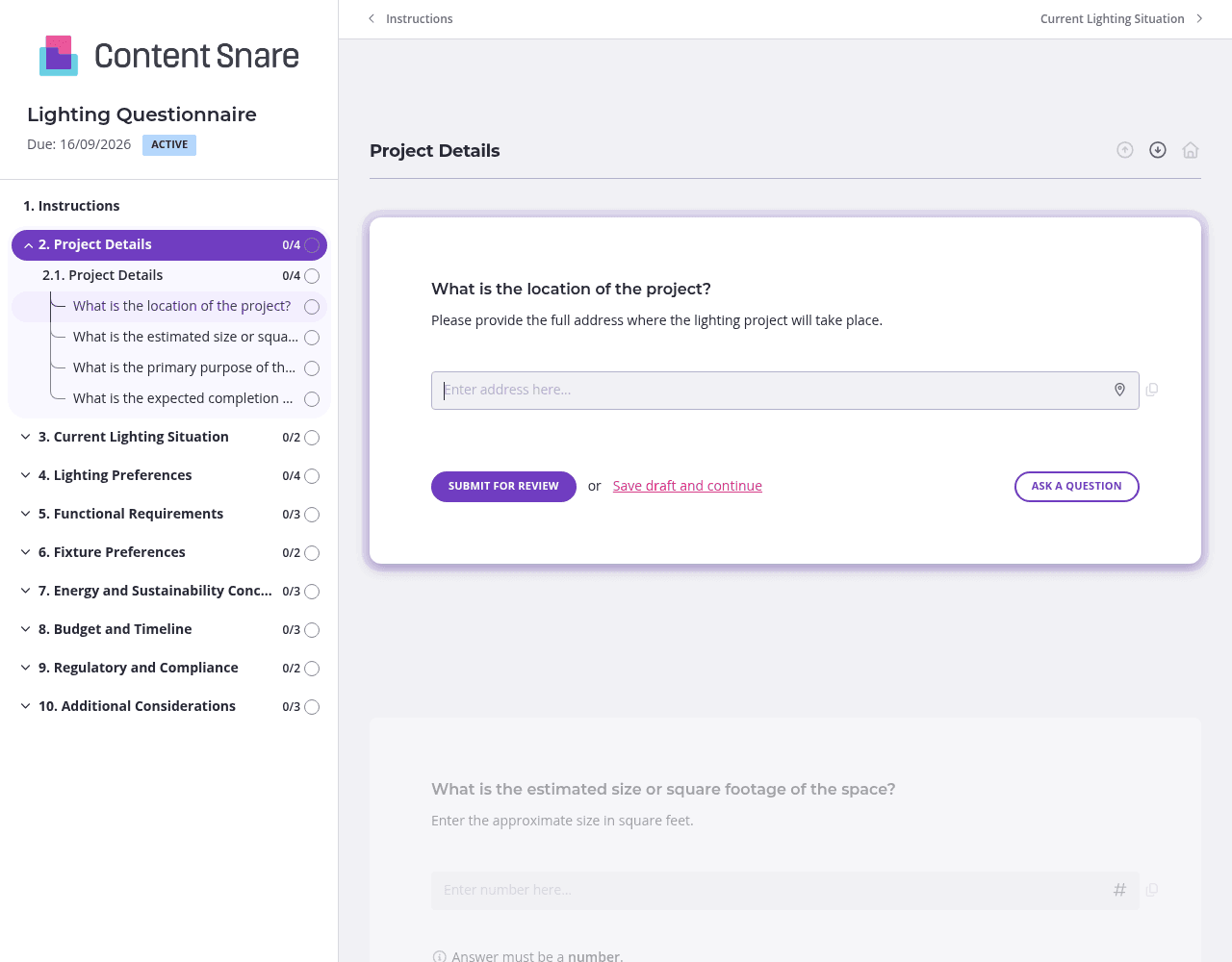
A lighting questionnaire covers a lot of ground - project specs, ambiance preferences, energy concerns, budget, and compliance. Dump it all on one page and clients abandon halfway through.
Split it into focused sections: Project Details, Functional Requirements, Energy & Sustainability, Budget & Compliance. Each page feels manageable. Clients can save progress and return later without losing work. You get complete responses instead of half-finished guesswork.
"What type of ambiance or mood are you looking to achieve?" sounds straightforward until a client stares at a blank field for five minutes.
Drop in example images showing warm vs. cool lighting, or a quick explainer about task lighting vs. ambient lighting. A 30-second video showing the difference between recessed fixtures and pendants eliminates confusion. Instructions below each question guide clients toward the detail level you actually need - which saves you from follow-up emails asking what they meant by "nice lighting."
You've likely captured basic project info - location, square footage, completion date - during the sales conversation or site visit.
Prefill those fields before sending the form. Clients see you've done your homework, and they skip straight to the questions that matter: fixture preferences, energy priorities, and budget. Shorter forms get completed faster, and you look more organized in the process.
Clients forget. It's not personal - they're managing ten other trades and a dozen decisions.
Automatic reminders keep your lighting questionnaire moving without you chasing people down. Content Snare nudges clients at intervals you choose, so forms get completed on schedule and you can order fixtures before lead times become a problem.
Email threads get messy. Spreadsheets get lost. Phone notes disappear between your truck and the office. Content Snare centralizes everything in one place, chases clients automatically, and gives you a complete record of every answer. You look more professional, clients have a better experience, and nothing slips through the cracks.
Trusted by thousands of businesses worldwide and backed by hundreds of 5-star reviews across G2, Capterra, and Trustpilot, Content Snare is built for teams that need information fast - without the back-and-forth.
It's ISO 27001 certified, so client data stays secure. It integrates with the tools you already use - your CRM, project management software, and accounting systems. And it's highly customizable, which means you can adapt it to how your business actually works.
This form is just one way to use Content Snare. Construction teams also use it for:


