
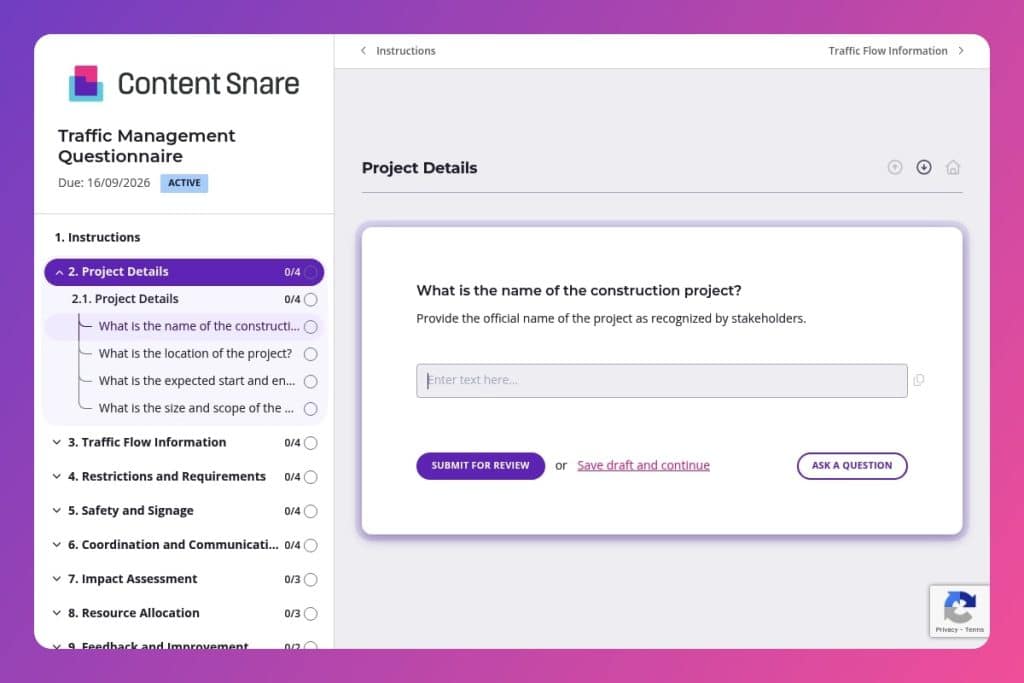


A comprehensive pre-project questionnaire that collects all critical information needed to develop a compliant traffic management plan, covering project scope, traffic patterns, regulatory requirements, safety measures, permits, and community impact.

Construction site managers, project coordinators, and civil contractors who need to gather detailed traffic management requirements from clients, councils, and stakeholders before commencing roadworks or projects affecting public thoroughfares.

Send this 48 hours before your first site meeting to gather upfront details about traffic flows, restrictions, permits, and stakeholder concerns so you can arrive with a draft traffic management plan rather than starting from scratch.
A single missed detail in your traffic management plan can halt a multi-million dollar project and turn local residents into vocal opponents. You're juggling road closures, peak-hour restrictions, pedestrian safety, permit deadlines, and stakeholder communications - all while keeping your site operational and compliant.
A traffic management questionnaire streamlines this chaos. It captures every critical detail upfront: traffic patterns, regulatory requirements, safety measures, resource needs, and community impact. You'll see exactly what this form should cover, how to use it effectively on your construction projects, and get access to a ready-to-use template. Let's dive in.
Project Details
Use this group to anchor core project parameters that drive phasing, permits, and notifications.
Traffic Flow Information
Gather baseline movement patterns to shape detours, signal timing, and staging.
Restrictions and Requirements
Define legal and policy constraints so the plan is compliant and defensible.
Safety and Signage
Specify the control measures that protect road users and crews.
Coordination and Communication
Lock down ownership, channels, and escalation to keep execution tight.
Impact Assessment
Assess disruption, agree mitigations, and set your monitoring approach.
Resource Allocation
Confirm equipment, staffing, and budget to deliver the plan.
Feedback and Improvement
Capture lessons and site-specific suggestions to refine the approach.
Permits and Approvals
Verify required authorizations and any support needed to secure them on time.
Traffic Management and Environmental Considerations
Plan for accessibility, environment, resilience, and public comms across varied scenarios.
Send it before your first site meeting: Get responses back 48 hours in advance so you can review traffic patterns, peak hours, and regulatory restrictions ahead of time. You'll walk into that meeting with a draft plan already forming, not starting from scratch.
Use it to align multiple stakeholders early: Traffic management involves site managers, local councils, community liaisons, and sometimes police or transport authorities. Share this questionnaire with all relevant parties at once to surface conflicting requirements or concerns before they become project delays.
Pay special attention to the impact assessment questions: Clients often underestimate how road closures affect local businesses and residents. Push for detailed answers here - alternative routes, communication plans, and mitigation strategies. These responses become your blueprint for community relations and can prevent complaints that stall work.
Flag incomplete answers on permits and approvals immediately: Don't let vague responses like "we'll get those sorted" slip through. If permit status is unclear, follow up before progressing. Missing approvals are one of the fastest ways to rack up costly downtime.
Create a follow-up checklist from their responses: Once you receive the completed form, convert critical items - budget confirmation, resource allocation, emergency procedures - into a tracking document. Share it back with the client as a joint action plan so nothing falls through the cracks during execution.
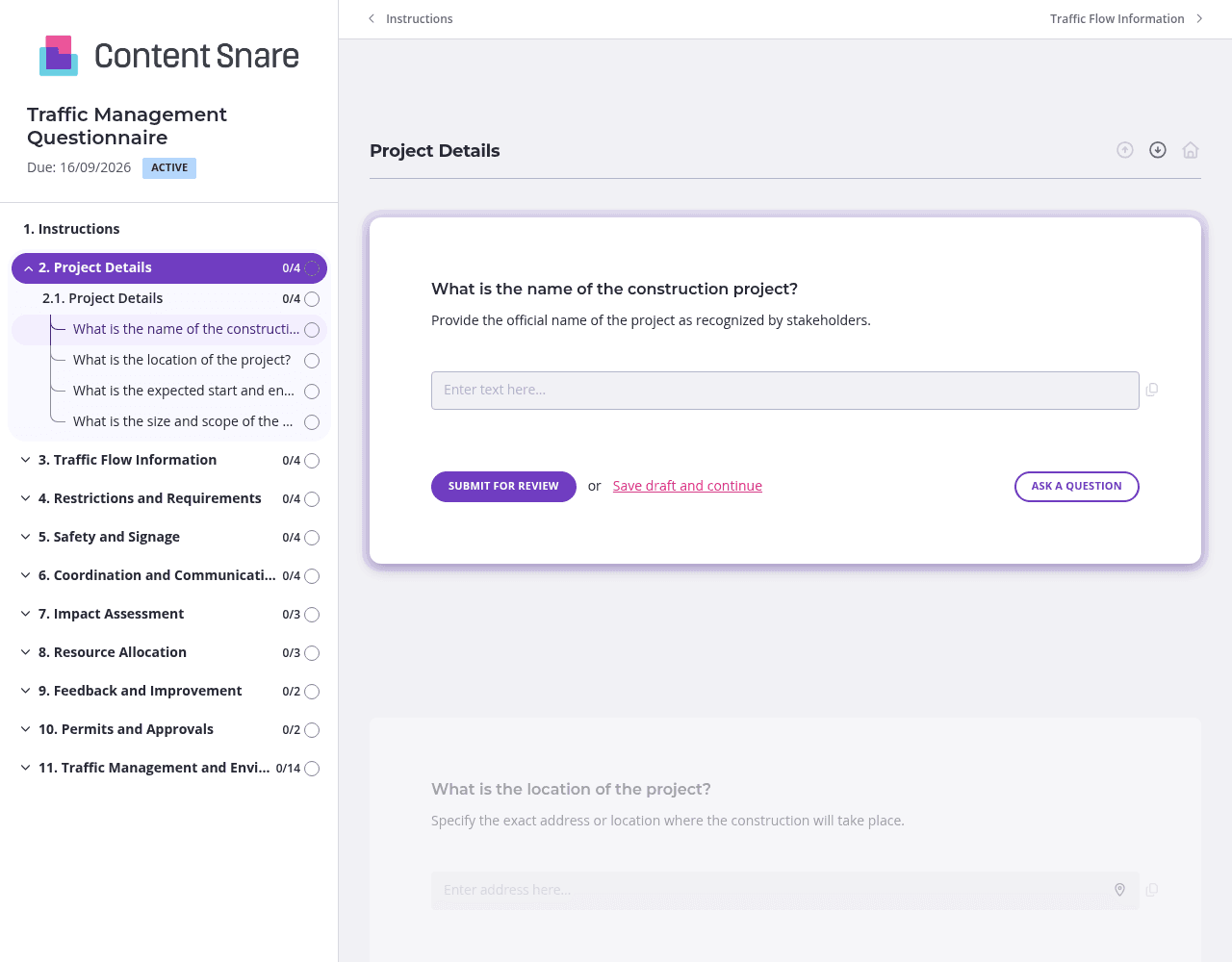
Traffic management questionnaires cover a lot of ground - project details, safety requirements, permits, community impact. Dumping 40+ questions on one endless page overwhelms clients and increases the chance they'll skip critical details.
Content Snare lets you organize questions into logical sections: Project Details, Traffic Flow Information, Safety and Signage, Permits and Approvals. Clients work through one focused area at a time, which means better quality responses and fewer "I'll come back to that later" gaps that never get filled.
Questions about regulatory restrictions, peak traffic hours, or required permits often confuse clients who aren't traffic management experts. They'll guess, leave it blank, or give you incomplete answers that require multiple follow-up rounds.
Use instruction areas to clarify what you actually need. For "What permits are required?" - add a note like "Include road occupancy permits, traffic signal approvals, and any council-specific requirements for your area." Attach a quick reference document or link to local authority guidelines. You'll cut back-and-forth emails in half.
Not every project needs traffic control personnel or has pedestrian considerations. Asking irrelevant questions wastes your client's time and clutters their experience.
Set up conditional logic so follow-up questions only appear when needed. If they answer "Yes" to road closures, show the detour planning questions. If they select "No traffic control personnel required," skip that entire section. Clients see a questionnaire tailored to their specific project, and you get cleaner, more focused data.
You likely have basic project information before sending this form - project name, location, client contact details, maybe even the timeline. Don't make clients re-enter what you already discussed.
Prefill those fields in Content Snare before you send. Clients see you've done your homework, they save time, and you reduce the risk of mismatched information between your records and their responses. It's a small touch that makes the whole process feel more professional.
Email threads and static PDFs create chaos when you're collecting traffic management information. Clients forget to answer questions, you lose track of who's responsible for what, and critical details - like permit statuses or safety requirements - get buried in long reply chains. Content Snare eliminates that mess with a structured, trackable process that keeps projects moving forward.
You get automatic follow-ups so clients stay on track without you nagging them. Clear progress tracking shows exactly what's complete and what's still missing. Secure file uploads mean clients can attach permits, site plans, and regulatory documents directly in context - no more hunting through email attachments.
Content Snare is ISO 27001 certified and trusted by thousands of businesses worldwide, including construction firms managing sensitive project data. It integrates with the tools you already use and has hundreds of 5-star reviews across G2, Capterra, and Trustpilot.
Traffic management questionnaires are just the starting point. Construction companies use Content Snare to collect:
Every form is customizable, so you can adapt it to match your exact workflows and client needs.


