
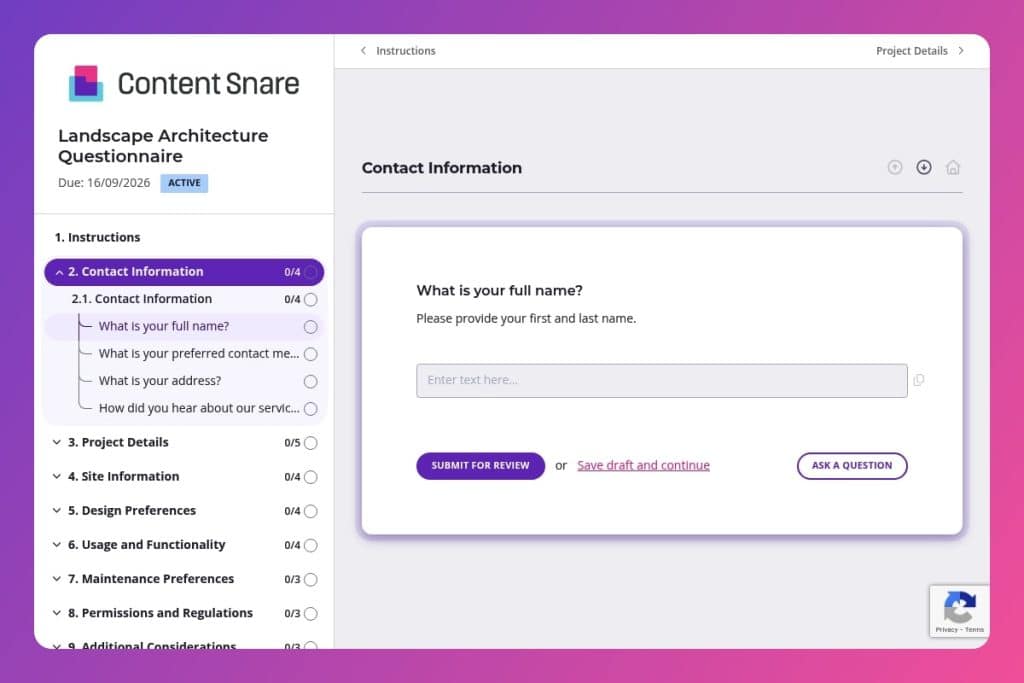


A pre-project questionnaire that collects site details, design preferences, budget parameters, regulatory requirements, and maintenance expectations before landscape work begins.

Landscape architects, landscape contractors, and design-build firms who need comprehensive project information from residential or commercial clients before drafting plans or breaking ground.

Send this questionnaire immediately after initial client contact and before the first site visit, so you arrive prepared with property documentation, HOA restrictions, and clear design direction already in hand.
How many times has a landscape project stalled because critical site details surfaced halfway through design - or worse, during construction? Missing information about drainage issues, HOA restrictions, or budget expectations can derail timelines and inflate costs fast.
A landscape architecture questionnaire solves this upfront. It captures everything you need in one organized sweep: project goals, site constraints, design preferences, maintenance expectations, and regulatory requirements. This post covers what makes an effective questionnaire, how to use it with clients, and includes a free template you can customize. Let's break it down.
Contact Information
Collect core contact details for coordination and record keeping.
Project Details
Establish scope, aesthetic direction, budget, and schedule at intake.
Site Information
Gather physical parameters and technical documents to ground feasibility and code checks.
Design Preferences
Align on planting palette, color direction, and hardscape or garden features.
Usage and Functionality
Clarify program so circulation, adjacencies, and sizing match real use.
Maintenance Preferences
Set expectations for upkeep, resources, and long-term operating costs.
Permissions and Regulations
Surface regulatory constraints that shape approvals, timelines, and allowable work.
Additional Considerations
Account for privacy, habitat goals, and inclusive access needs.
Feedback and Expectations
Calibrate references, collaboration level, and communication cadence.
Additional Comments
Provide space for anything not covered that could influence scope or priorities.
Send the questionnaire before the first site visit: Give clients time to gather essential documents like site surveys, soil reports, and HOA guidelines ahead of your meeting. You'll spend less time chasing paperwork and more time discussing design vision when you actually walk the property together.
Use the "projects you admire or dislike" question as a conversation starter: Client answers here reveal aesthetic preferences faster than abstract questions about style. If they mention a specific Instagram account or a neighbor's patio they can't stand, you've got concrete direction for design development - and you can avoid wasting time on concepts that won't resonate.
Flag any conflicting answers during your initial review: A client who wants "minimal maintenance" but lists high-maintenance plant species needs a follow-up conversation. Same goes for ambitious hardscaping requests paired with tight budgets. Address these mismatches early in a quick call or email - it saves awkward revisions later and sets realistic expectations from day one.
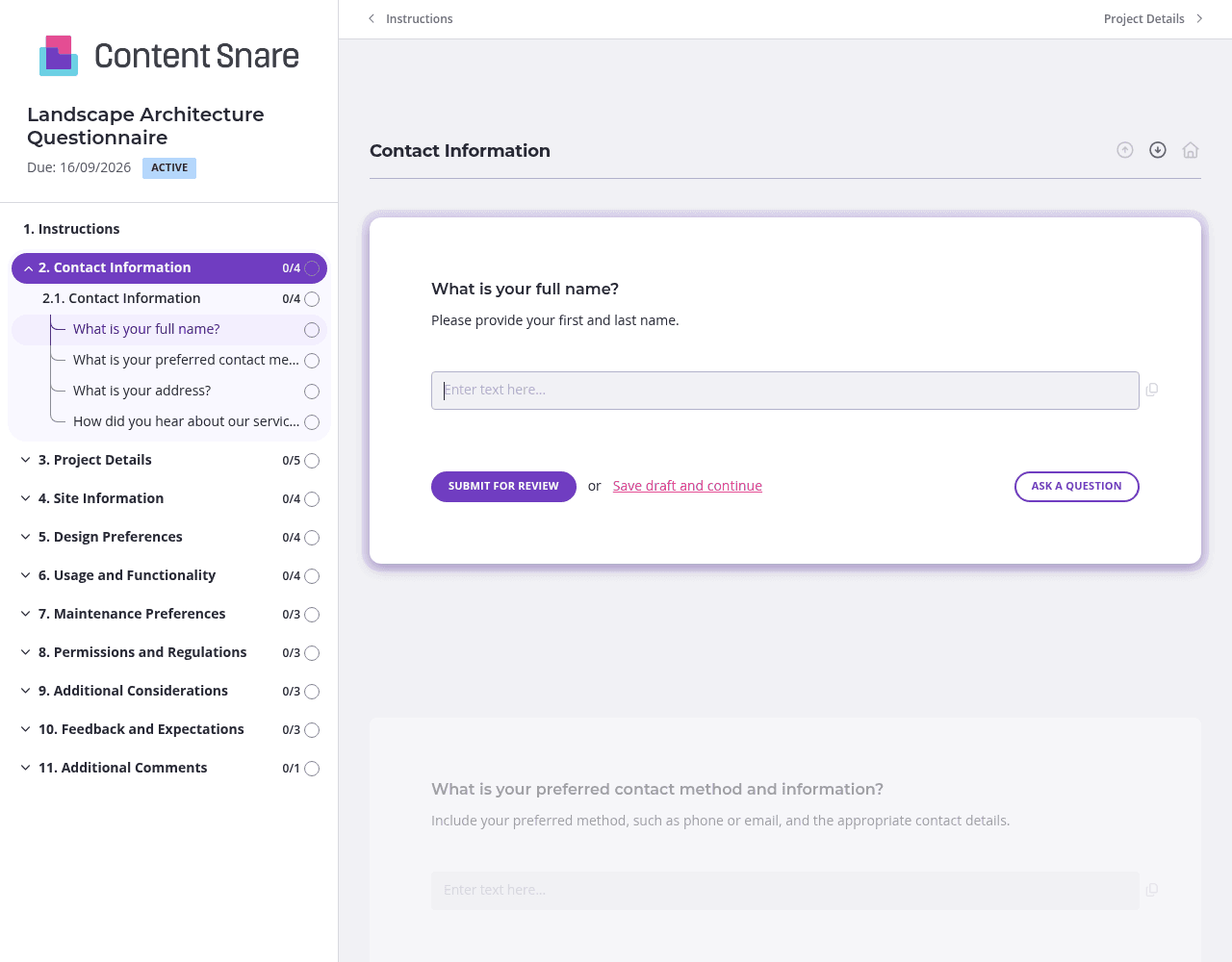
Landscape architecture questionnaires can feel overwhelming when clients see 40+ questions at once. Split yours into clear sections: Contact Information, Project Details, Site Information, Design Preferences, and so on. Clients can tackle one page at a time, save progress, and come back later. You'll get higher completion rates and fewer half-finished submissions.
The "site constraints" question trips up clients who don't know what you're asking for. Add a brief note explaining you need details about slope issues, underground utilities, easements, or poor drainage areas. Same goes for "hardscaping features" - include a quick example list (retaining walls, pergolas, fire pits) so clients understand the scope. Clear instructions mean fewer back-and-forth clarifications after submission.
Not every client needs every question. If someone selects "residential garden" as their project purpose, you don't need to ask about sports fields or large recreational areas. Show or hide questions based on previous answers. The form stays focused, clients aren't annoyed by irrelevant questions, and you still capture all the details that actually matter for their specific project.
Clients often skip questions asking for site plans, soil reports, or HOA documentation - not because they're avoiding them, but because they need to dig through files or request copies. Automatic reminders nudge them to circle back without you having to send awkward follow-up emails. You get the documents you need without feeling like you're nagging.
Email chains and PDFs create chaos. Clients miss questions, forget attachments, and you waste hours chasing information. Content Snare keeps everything organized in one place with automatic reminders, progress tracking, and a clean client experience. Thousands of businesses worldwide trust it to collect information without the back-and-forth headaches.
Content Snare is ISO 27001 certified, so sensitive project documents and client data stay secure. It integrates with tools you already use and has earned hundreds of 5-star reviews across G2, Capterra, and Trustpilot for its ease of use and reliability.
This landscape architecture questionnaire is just one application. Construction professionals use Content Snare for:
The platform adapts to whatever information you need to collect - questionnaires, documents, approvals, or feedback - with full customization and client-friendly automation built in.


