
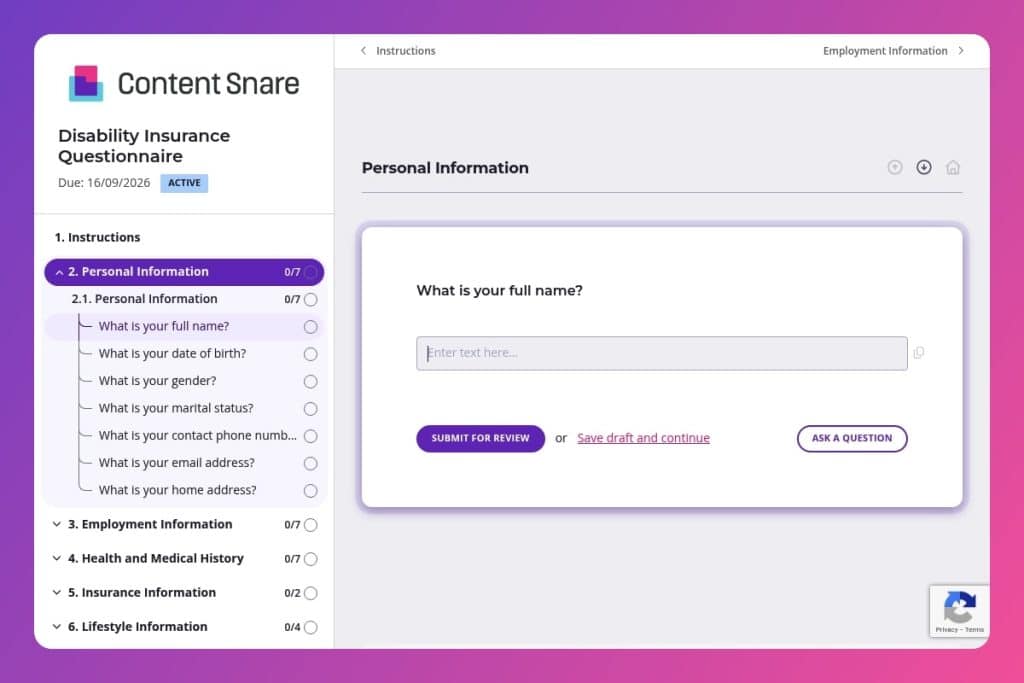


A comprehensive intake questionnaire that collects personal details, employment information, health history, existing coverage, lifestyle factors, and benefit preferences needed to quote and underwrite disability insurance policies.

Insurance brokers and agents who need to gather complete client information upfront to streamline underwriting, reduce application errors, and avoid chasing missing details during the disability insurance sales process.

Send this during initial client onboarding or when a prospect expresses interest in disability coverage, before submitting applications to carriers or beginning the underwriting process.
Most disability insurance applications stall before they even start. Clients abandon half-completed forms, critical health details go missing, and underwriting drags on for weeks. You're stuck chasing information that should have been captured upfront.
A well-designed disability insurance questionnaire fixes this. It gathers everything you need - employment details, health history, existing coverage, lifestyle factors, and benefit preferences - in one organized intake process. This post covers what belongs in an effective questionnaire, how to use it to streamline client onboarding, and includes a free template you can customize. Let's get started.
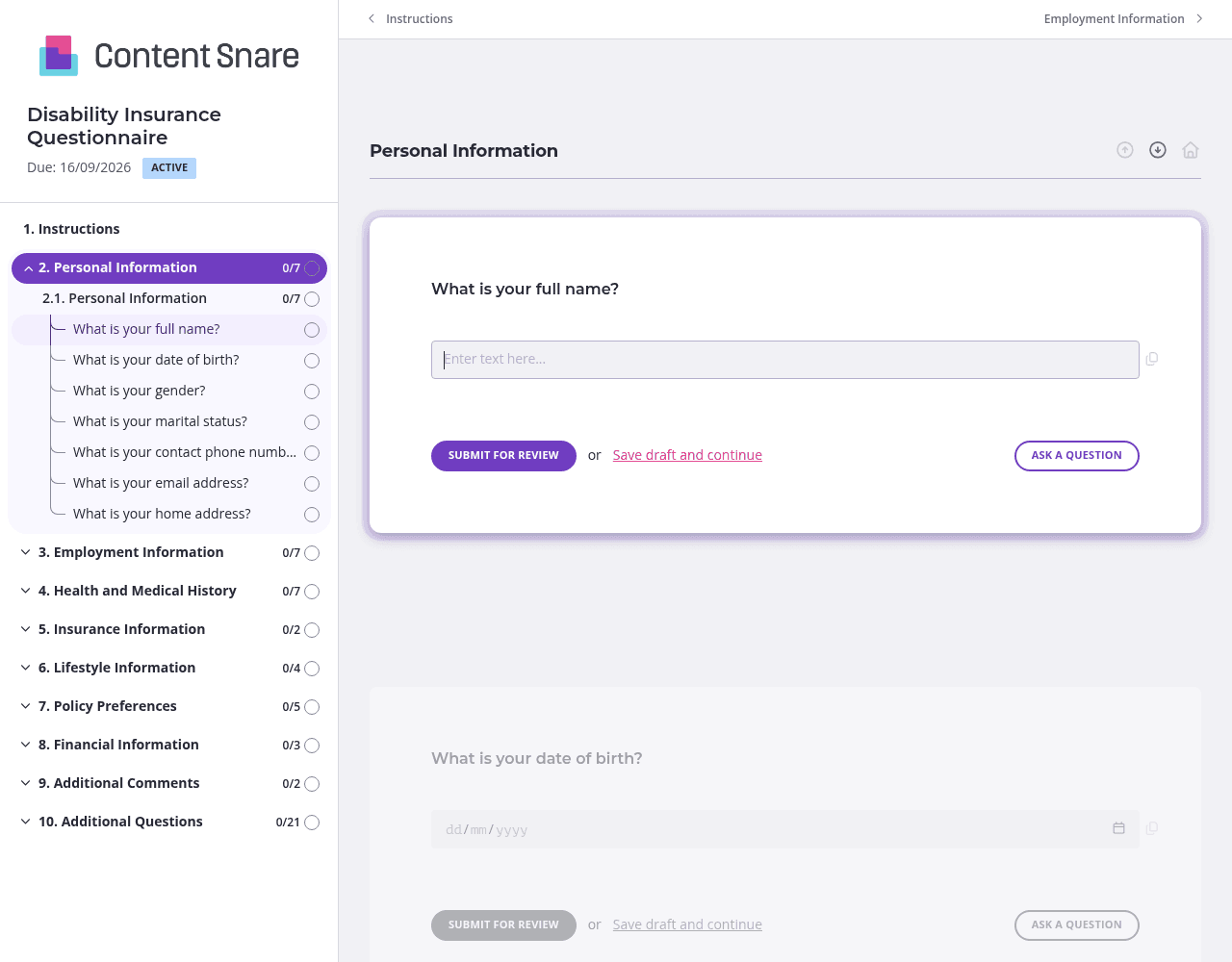
Personal Information
Collect core identifiers and contact details for matching, compliance, and outreach.
Employment Information
Capture occupation, employer, status, workload, tenure, and earnings to anchor underwriting and benefit calculations.
Health and Medical History
Screen for current and historical conditions, treatment, and hereditary risks to assess morbidity and exclusions.
Insurance Information
Map existing coverage and prior claims to coordinate benefits and assess replacement ratios and loadings.
Lifestyle Information
Flag risk modifiers tied to tobacco, alcohol, high-risk activities, and occupational driving or machinery use.
Policy Preferences
Elicit target structure and features to shape illustrations and quotes. Clarify parameters early to reduce revisions.
Financial Information
Establish obligations and dependents to gauge affordability, suitability, and replacement needs.
Additional Comments
Provide space for context or edge cases that may affect underwriting, exclusions, or product fit.
Send a prep email before the form: Let clients know they'll need specific documents handy - recent pay stubs for income verification, a list of current medications, details about existing disability policies, and information about any medical conditions or surgeries from the past five years. This cuts completion time in half and reduces abandoned forms.
Use the lifestyle and employment sections to spot coverage gaps early: Pay close attention to high-risk occupations, hazardous hobbies, and self-employment status. These details shape underwriting and help you recommend appropriate riders or coverage levels before submitting to carriers. A client who operates heavy machinery needs different protection than a desk worker, and catching this upfront saves revision rounds later.
Schedule a brief review call after submission: Walk through their responses together, especially the health history and policy preferences sections. Clients often underestimate their coverage needs or forget to mention part-time income sources. A 15-minute conversation now prevents delays during underwriting and builds trust by showing you're thorough.
You likely have basic client information on file - name, contact details, employer, current income. Delete those questions or pre-fill the answers before sending the form. Your client jumps straight to the questions that matter: health history, lifestyle factors, and coverage preferences. Less friction means faster completions.
The medical history section can feel overwhelming. Show follow-up questions only when they're relevant. If a client answers "no" to current medical conditions, skip the questions about medications and hospitalizations. If they don't have existing disability coverage, hide the questions about providers and benefit periods. Clients see a shorter, more personalized form and you get cleaner data.
Questions about "annual income" and "monthly living expenses" trip clients up. Does income mean gross or net? Do living expenses include debt payments? Add brief instructions directly under these questions so clients know exactly what to provide. A single line of guidance prevents back-and-forth clarification emails and speeds up underwriting.
Disability insurance questionnaires are long by nature - clients often start them and get pulled away. Automatic reminders nudge them to finish without you manually tracking who's completed what. Content Snare sends follow-ups on your behalf, so forms get completed and you stay focused on advisory work instead of administrative chase-ups.
Email threads and PDF forms create chaos. Clients lose attachments, forget questions, and send incomplete information. You waste hours chasing details that should have been captured the first time. Content Snare eliminates the back-and-forth with a purpose-built platform that tracks progress, sends automatic reminders, and keeps everything organized in one place.
It's secure and professional. Content Snare is ISO 27001 certified and trusted by thousands of businesses worldwide, including insurance brokers who handle sensitive client data daily. Your questionnaires are branded with your logo and colors, so clients experience a seamless extension of your business - not a generic form tool.
It integrates with the tools you already use. Connect Content Snare to your CRM, email platform, or document management system. Client responses flow directly into your workflow without manual data entry.
The efficiency gains add up fast. Content Snare has hundreds of 5-star reviews across G2, Capterra, and Trustpilot from businesses that have cut their information-gathering time in half.
This form is just one use case. Insurance brokers use Content Snare for new client onboarding packets, annual policy review questionnaires, commercial insurance applications, beneficiary update forms, and claims documentation intake. Any situation where you need detailed information from clients becomes faster and more professional.


