
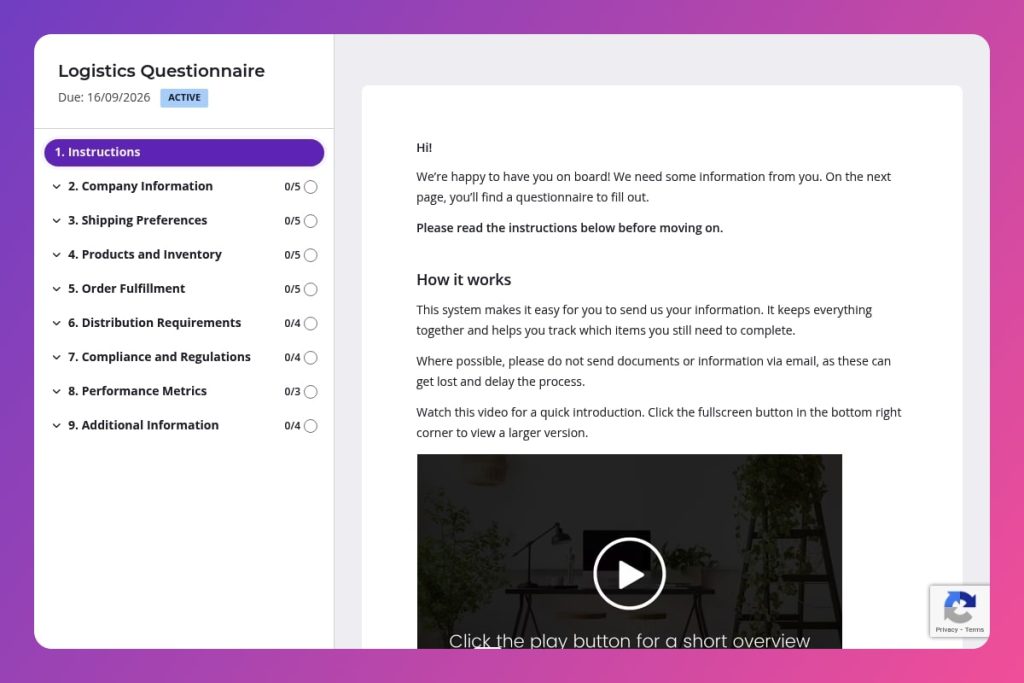


A comprehensive form that collects shipping preferences, product details, carrier requirements, warehouse locations, compliance needs, and fulfillment processes from clients or logistics partners.

Logistics providers, freight forwarders, third-party logistics companies, supply chain consultants, and businesses coordinating shipping operations with clients or vendors.

Send this 48 hours before initial logistics discussions with new clients or partners to gather operational details, identify special handling requirements, and prepare tailored solutions before your first meeting.
How much time do you lose chasing down shipping details, carrier preferences, and compliance requirements from clients or partners? Scattered information leads to shipping delays, miscommunication about hazardous materials, and costly errors in order fulfillment. A logistics questionnaire changes that by gathering everything upfront - from packaging specs and delivery timeframes to warehouse locations and regulatory needs.
This post shows you exactly how a logistics questionnaire streamlines information collection. You'll get an overview of what to include, practical tips for getting responses quickly, and a free template you can customize. Let's get started.
Company Information
Gather legal entity and point-of-contact details needed for contracting and coordination.
Shipping Preferences
Map the client's transport, carrier, and packaging norms to align routing and service levels.
Products and Inventory
Capture product profiles and inventory practices to determine handling, compliance, and cost drivers.
Order Fulfillment
Document order intake, processing, and reverse logistics to scope integrations and SLA commitments.
Distribution Requirements
Clarify network footprint, service regions, warehousing needs, and last-mile expectations to design the solution.
Compliance and Regulations
Confirm regulatory, customs, security, and environmental requirements to avoid delays and penalties.
Performance Metrics
Align on measurement cadence, KPIs, and improvement targets to set accountable performance management.
Additional Information
Surface constraints, budget, and expectations that shape viability and fit.
Send it before your first logistics meeting: Get the questionnaire to prospects or new clients 48 hours before you discuss their needs. You'll spot red flags early - like hazardous materials requiring special handling or international shipments needing customs brokerage - and come prepared with solutions instead of scrambling for answers mid-conversation.
Flag the sections that matter most for their situation: Not every client needs to answer every question in detail. If you're working with a domestic-only shipper, tell them upfront they can skip the customs and international compliance sections. If they're purely e-commerce fulfillment, emphasize the order processing and returns questions. This targeted approach gets you better responses faster.
Schedule a 15-minute review call after submission: Don't just file away their answers. Walk through anything unclear - vague KPIs, mentions of "past logistics challenges," or contradictory delivery timeframe expectations. This follow-up catches misunderstandings before they become operational problems and shows clients you're actually reading their responses, not just collecting data.
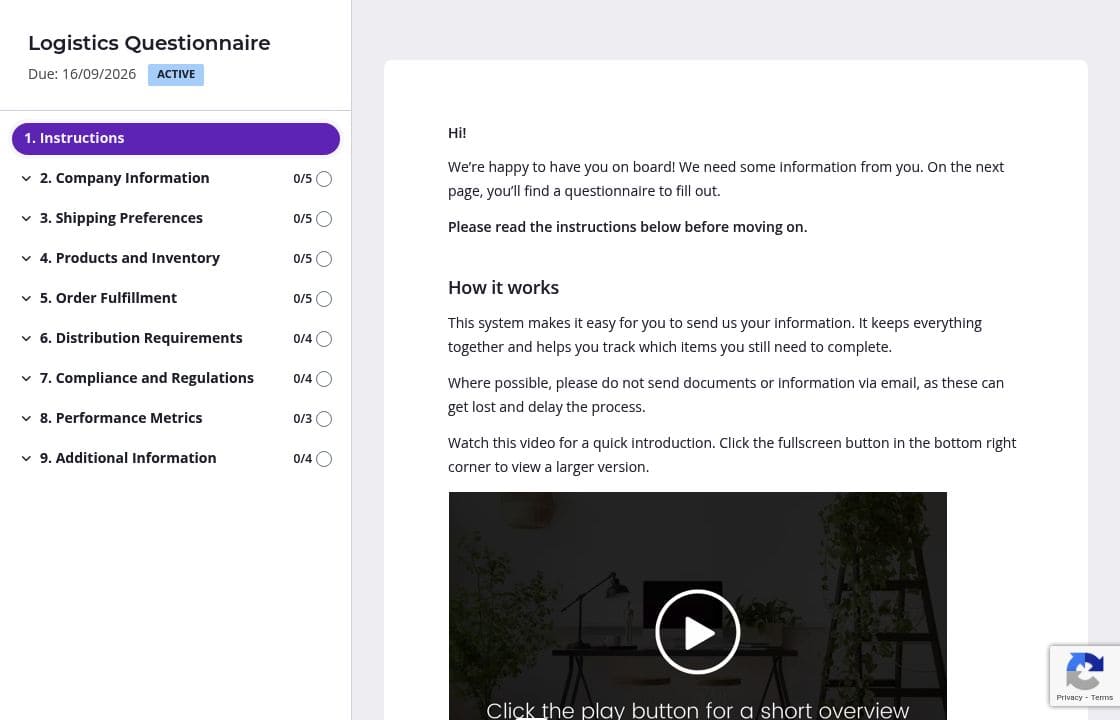
Not every client ships internationally or handles hazardous materials. Set up conditional logic so questions about customs brokerage only appear when someone indicates they ship across borders. Same for hazardous material handling, warehousing needs, or freight insurance. Clients see a shorter, more relevant form - and you get cleaner responses without sorting through dozens of "N/A" answers.
The questions about product dimensions, weights, and packaging specs often trip people up. Add brief instructions directly above those fields: "Include pallet dimensions if applicable" or "List weight ranges for your top 3 product categories." Same for the compliance section - a quick note like "Mention any HAZMAT certifications or FDA requirements" helps clients give you complete information the first time. You'll spend less time following up on vague answers.
Clients get busy and logistics questionnaires aren't their top priority. Automatic reminders handle the follow-up for you - no awkward emails asking "Did you forget about this?" Content Snare sends gentle nudges at intervals you choose, keeping your pipeline moving without you playing the bad guy. Especially valuable when you're onboarding multiple clients at once.
You probably have basic company information, contact details, and shipping volumes from initial conversations. Prefill those fields before sending the form. Clients appreciate not retyping their business name and headquarters address, and they're more likely to complete a form that's already 20% done. Delete entire sections if they're irrelevant - a purely domestic shipper doesn't need to see international compliance questions at all.
Spreadsheets get lost in email threads. Word documents come back with half the fields blank. Phone calls mean manually typing notes while trying to capture technical details about shipping volumes and compliance requirements. Content Snare centralizes everything in one secure place, with automatic reminders so nothing slips through and progress tracking so you know exactly who's stuck on which section.
Thousands of businesses trust Content Snare to collect critical information without the usual chaos. It's ISO 27001 certified - essential when you're handling supplier contracts, vendor details, and operational data. The platform integrates with the tools you already use, and it's customizable enough to match how you actually work.
Logistics questionnaires are just the starting point. You can use Content Snare to onboard new vendors, collect supplier documentation and certifications, gather RFP responses from potential partners, or streamline compliance audits across your supply chain. One system handles it all, with hundreds of 5-star reviews across G2, Capterra, and Trustpilot backing up what users already know: this is the easiest way to stop chasing information.


