
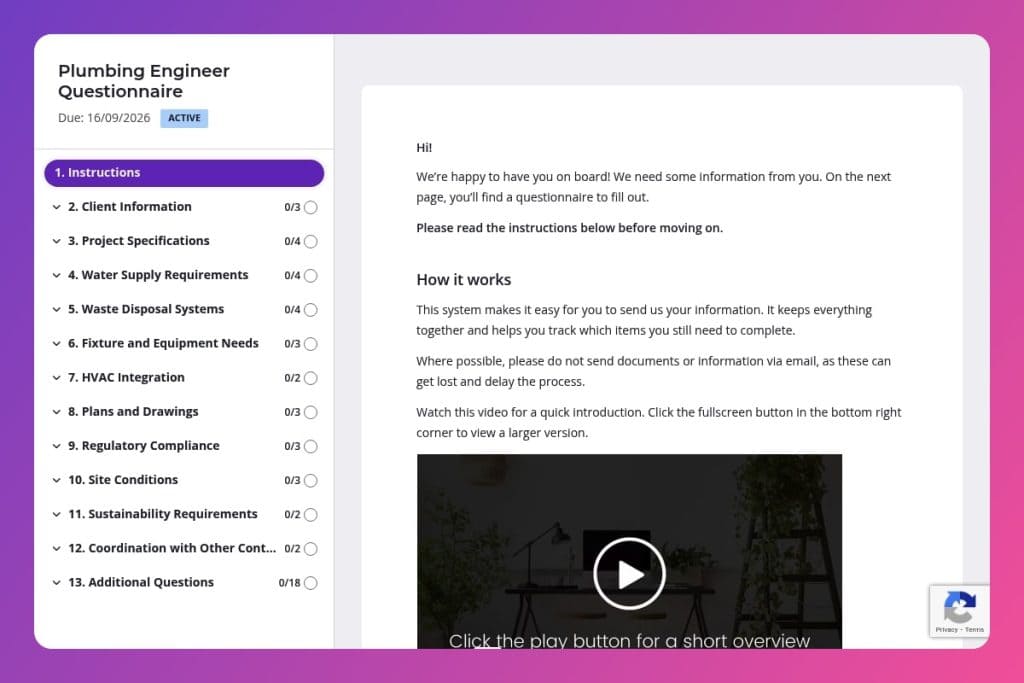


A pre-project questionnaire that captures complete plumbing specifications, from water supply sources and fixture requirements to HVAC integration, site conditions, and regulatory compliance needs.

General contractors, construction project managers, and plumbing contractors who need comprehensive project details from clients before preparing bids or beginning engineering work.

During the pre-bid or initial consultation phase, before contracts are signed, so you can provide accurate estimates and identify project complexities like greywater systems, specialized fixtures, or site access restrictions upfront.
Ever watched a project grind to a halt because the plumbing engineer didn't know about the greywater recycling requirement until week three? Miscommunication between contractors and plumbing engineers costs construction projects thousands in delays and rework. Missing details about water supply sources, fixture specifications, or HVAC integration creates bottlenecks that ripple through your entire timeline.
A plumbing engineer questionnaire solves this problem upfront. You collect all critical project information - from regulatory requirements to site constraints - before work begins. This post covers what makes an effective questionnaire, how to use it on your next build, and includes a free template you can customize. Let's dive in.
Client Information
Collect key identifiers and a single point of contact to streamline approvals and RFI routing.
Project Specifications
Establish primary project constraints that drive sizing, selections, and phasing.
Water Supply Requirements
Define supply characteristics to size mains, boosters, and treatment early.
Waste Disposal Systems
Clarify conveyance strategy and regulatory context for sanitary, storm, and alternative streams.
Fixture and Equipment Needs
Quantify fixture counts and specialized loads to inform demand, venting, and space planning.
HVAC Integration
Confirm hydronic and make-up water interfaces with mechanical systems.
Plans and Drawings
Assess available documentation and design support needs.
Regulatory Compliance
Capture governing codes and permit status to align design, submittals, and inspections.
Site Conditions
Document constraints and existing conditions that affect constructability and phasing.
Sustainability Requirements
Record sustainability targets and renewable options that affect system selection and controls.
Coordination with Other Contractors
Set expectations for trade coordination and communication workflows.
Send it during pre-bid or initial consultation: Don't wait until you've signed the contract. Get this questionnaire to potential clients during the bidding phase so you can provide accurate estimates. You'll know upfront if they need specialized medical fixtures, greywater systems, or temporary plumbing during construction - all factors that significantly impact your quote.
Ask for existing plans and drawings upfront: Include a request for clients to attach any existing plumbing plans, blueprints, or site surveys when they submit the form. This gives you visual context for their answers and helps you spot potential conflicts between what they're describing and what's actually on paper.
Follow up on vague answers immediately: If a client says "standard fixtures" or "meets local codes" without specifics, call them before your next meeting. You need to know exact fixture counts, preferred brands, and which building codes apply. Vague responses lead to scope creep and change orders later.
Use responses to create your project checklist: Turn their answers into your working document. Their timeline becomes your milestone schedule. Their permit status tells you what administrative work needs to happen first. Their mention of "other contractors on site" triggers your coordination protocol. The questionnaire isn't just intake - it's your project roadmap.
Share a summary with the entire team: After submission, create a one-page summary of critical details - water supply source, waste disposal requirements, HVAC integration needs, site access restrictions - and distribute it to everyone involved. This keeps subcontractors, suppliers, and other trades aligned from day one.
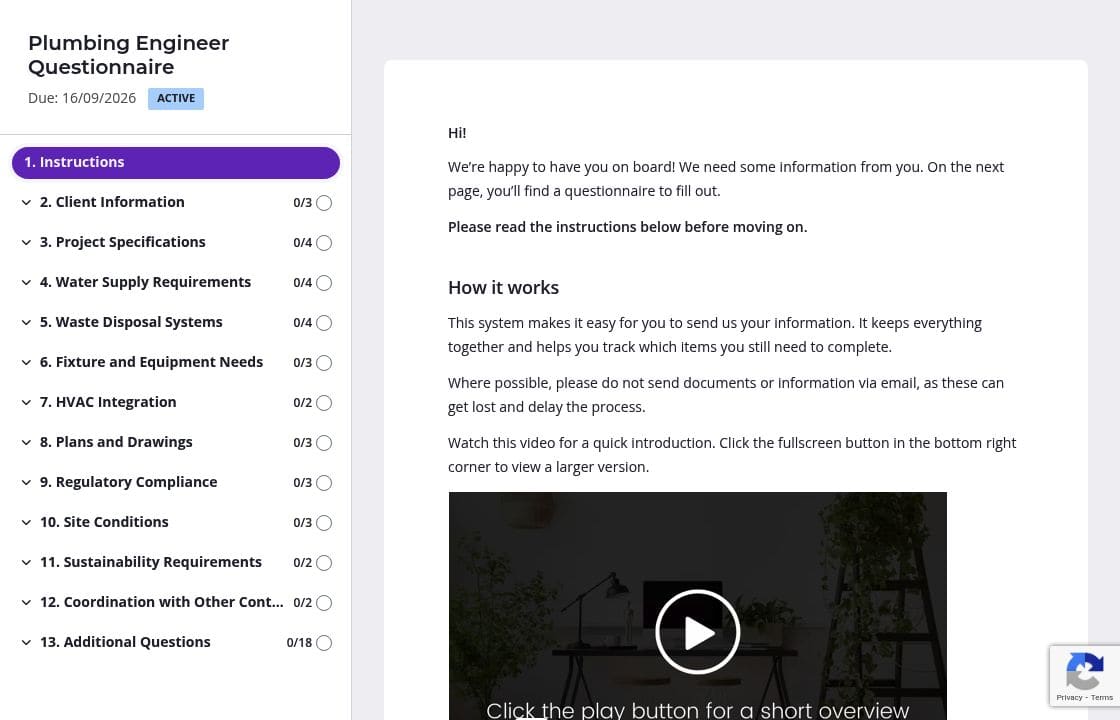
This questionnaire covers everything from water supply to regulatory compliance. That's overwhelming in one long scroll. Split it into separate pages: Client Information, Project Specs, Water & Waste Systems, Fixtures & Equipment, Site Conditions, and Compliance. Your clients can tackle one topic at a time, save progress, and come back later. They'll actually finish instead of abandoning halfway through.
Plumbing engineers know what "peak flow rate" and "greywater recycling" mean. Your clients might not. Use the instruction areas in Content Snare to add brief explanations or examples. For the water supply question, clarify whether you mean municipal, well, or rainwater collection. For HVAC integration, explain what information you actually need. Clear instructions mean fewer back-and-forth emails asking "what did you mean by this?"
Not every project needs greywater systems or laboratory fixtures. Set up conditional logic so specialized questions only appear when relevant. If a client says no existing sewer connection is available, show follow-up questions about septic or alternative systems. If they select "yes" for HVAC integration, display the hot and cold water supply questions. Clients see a shorter, more relevant form. You get better answers.
Clients rarely submit complete responses on the first try. They'll skip the permit status question or forget to attach existing drawings. Content Snare automatically reminds them about incomplete sections - no awkward emails from you. Set the reminder schedule once and let it run. You stay focused on engineering work instead of chasing down answers.
Email chains and shared documents create chaos, but Content Snare gives you a single organized place where clients submit everything you need - with automatic reminders handling the follow-up for you. You look more professional, save time, and get complete information faster.
Content Snare is trusted by thousands of businesses worldwide and has hundreds of 5-star reviews across G2, Capterra, and Trustpilot. The platform also integrates with tools you already use, from project management software to accounting systems. Everything flows into your existing workflow without creating extra work.
This form is just one way construction professionals use Content Snare. You can create intake forms for:


