
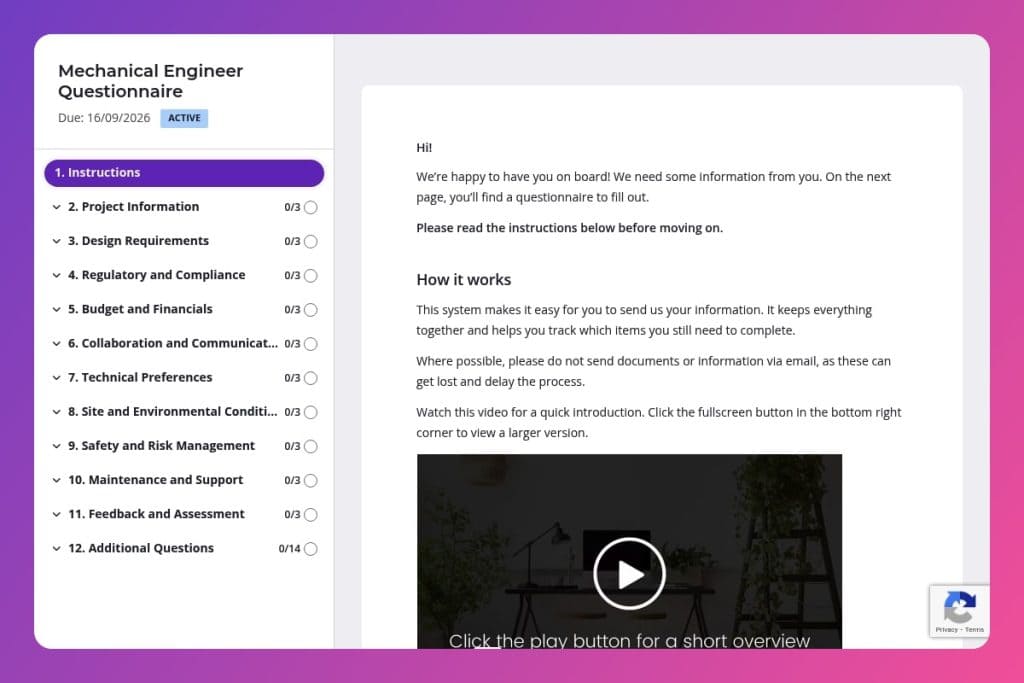


A pre-project questionnaire that captures mechanical engineering requirements including HVAC specifications, budget details, site conditions, regulatory compliance needs, and safety protocols before work begins.

Construction project managers, general contractors, and project coordinators who need to gather complete technical requirements from clients before engaging mechanical engineers or starting design work.

Send this form immediately after contract signing and before the project kickoff meeting to identify budget constraints, compliance requirements, and site challenges that impact engineering design and timelines.
Miscommunication between construction teams and mechanical engineers costs projects thousands in rework and delays. When critical details about HVAC specs, budget constraints, or site conditions get lost in email chains, you're left scrambling to fill gaps mid-project.
A mechanical engineer questionnaire solves this problem. It captures everything upfront - from regulatory requirements and existing infrastructure to safety protocols and maintenance plans. This post covers what the form includes, how to use it effectively with your engineering partners, and a ready-to-use template you can customize. Let's break it down.
Project Information
Establish baseline context to size effort, resources, and schedule. These items anchor scope, sequencing, and coordination.
Design Requirements
Confirm available design inputs and define system scope. Capture equipment and material preferences to align specifications and procurement early.
Regulatory and Compliance
Surface mandatory code paths and sustainability targets that drive design decisions. Validate permitting status to align deliverable sequencing.
Budget and Financials
Frame cost boundaries and funding conditions. This guides value engineering and phasing.
Collaboration and Communication
Clarify ownership and communication rhythm. Map stakeholders to streamline decisions and approvals.
Technical Preferences
Document technical constraints and preferences that influence architecture and integration. Address lifecycle and toolchain expectations upfront.
Site and Environmental Conditions
Record site realities that affect constructability, logistics, and system selection. Identify existing assets that impact tie-ins and phasing.
Safety and Risk Management
Set operational safety expectations before mobilization. Align on risk processes and incident response.
Maintenance and Support
Define operational commitments and service strategy. Align deliverables with maintenance requirements and post-construction support.
Feedback and Assessment
Leverage prior outcomes to sharpen scope and delivery. Agree on success metrics to guide trade-offs and reporting.
Send this form before your kickoff meeting: You'll walk into that first conversation with mechanical engineers already knowing their budget constraints, site conditions, and regulatory requirements. Use their responses to build a focused agenda instead of spending an hour gathering basic information.
Ask clients to attach existing plans or site photos: The questions about existing infrastructure and site conditions become far more valuable when you can see what you're working with. A few photos of the mechanical room or current HVAC setup will save multiple site visits and clarify integration challenges upfront.
Flag the sustainability and compliance questions early: These sections often reveal surprises - LEED certification requirements, local energy codes, or environmental restrictions that impact timelines and budgets. Make sure clients understand that vague answers here create expensive problems later, so encourage them to check with their compliance team before submitting.
Use responses to qualify engineering partners: If you're hiring a mechanical engineer for the project, share the completed questionnaire during your vetting process. Their reaction to the technical preferences, future-proofing considerations, and maintenance requirements will show you whether they're the right fit.
Create a project brief from their answers: Don't let those responses sit in your inbox. Pull key details - timeline, budget, stakeholders, safety protocols - into a one-page summary that becomes your project reference document. Share it with your entire construction team so everyone's working from the same information.
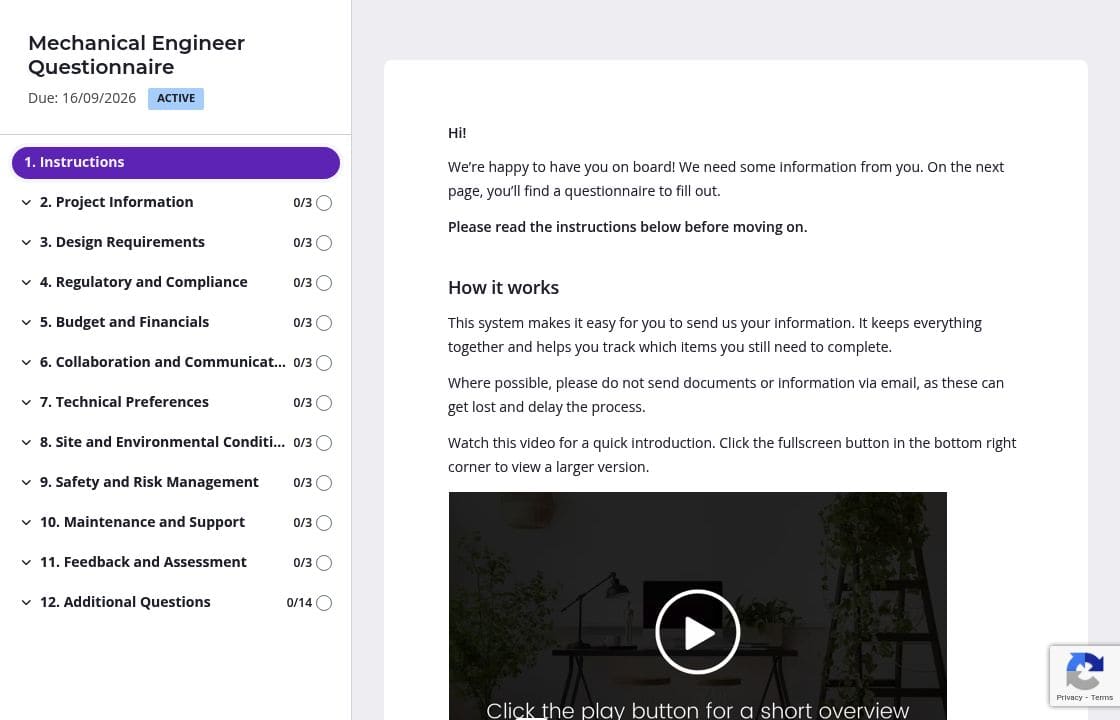
This questionnaire covers a lot of ground - regulatory compliance, budget details, technical specs, safety protocols. Dump it all on one page and your client will procrastinate for weeks. Break it into logical sections: Project Overview, Technical Requirements, Compliance & Safety, Budget & Timeline. Clients can complete one section at a time, save their progress, and come back later. You'll get responses faster and they'll be more thorough.
The questions about existing infrastructure, environmental conditions, and specific mechanical systems often confuse clients who aren't engineers themselves. Add a brief instruction under each one explaining what you need and why it matters. For the site conditions question, tell them: "Include details about access constraints, ceiling heights, and utility locations - this helps avoid costly surprises during installation." Clear guidance means fewer back-and-forth clarifications later.
You've got enough to manage on a construction project without chasing down questionnaire responses. Configure reminders to nudge clients automatically after a few days. They get a friendly prompt, you stay off their back, and the form gets filled out before your engineer needs to start work. No awkward follow-up emails required.
You likely have basic project details already - location, timeline, primary contact, maybe even budget range. Prefill those fields before sending the form. Your client sees you've done your homework, they skip redundant questions, and you get straight to the information gaps you actually need filled. Delete entire sections if they're not relevant to a particular project.
Email threads and shared spreadsheets create chaos on construction projects. Critical details get buried, versions get confused, and you're never sure if you have complete information. On the other hand, Content Snare gives you a single, organized system where clients submit exactly what you need - and you can track every response in real time.
The platform is trusted by thousands of businesses worldwide and has earned hundreds of 5-star reviews across G2, Capterra, and Trustpilot. It's ISO 27001 certified, so sensitive project data stays secure. Plus it integrates with the tools you already use, from project management software to your CRM.
Content Snare transforms how you collect information. Automatic reminders mean forms actually get completed. Instructions and formatting keep responses clean and usable. Your branding makes everything look professional. Clients get a smooth experience, you eliminate follow-up hassles, and projects start with complete information.
This form is just one way construction companies use Content Snare. You can streamline subcontractor onboarding, collect client requirements for architectural plans, gather site inspection details, or request project closeout documentation - all in one platform that keeps your team organized and clients on track.


